
How King Tides can cause salt water intrusion in the ground floor of Miami Beach properties
King Tides push corrosive salt water into Miami Beach ground floors causing immediate structural damage. Salt water eats through concrete rebar and corrodes electrical systems within 24 hours. Properties in South Beach and North Beach experience the worst flooding when seasonal high tides meet Miami’s porous oolitic limestone bedrock. Professional water extraction for Doral commercial properties and warehouses.
The science behind King Tide flooding in Miami Beach
King Tides occur when the moon’s gravitational pull combines with seasonal high tides creating water levels 2-3 feet above normal. Miami Beach sits on porous oolitic limestone that acts like a sponge during high tides. Water pushes up through the ground and into ground floor units even on sunny days. Commercial Water Damage Restoration.
During King Tide events the National Oceanic and Atmospheric Administration records water levels in Biscayne Bay reaching 3.5 feet above MLLW (Mean Lower Low Water). This creates hydrostatic pressure against foundation walls. Water finds the path of least resistance through cracks in concrete slabs and around aging plumbing penetrations. Efflorescence on Concrete.
Properties built before 2013 often lack modern floodproofing measures required by the Miami-Dade County Building Code. Older structures have no backwater valves or raised mechanical systems. Salt water sits on ground floors for hours or days creating perfect conditions for mold growth and material degradation. Water Damage Restoration Coral Gables.
Why salt water causes more damage than fresh water
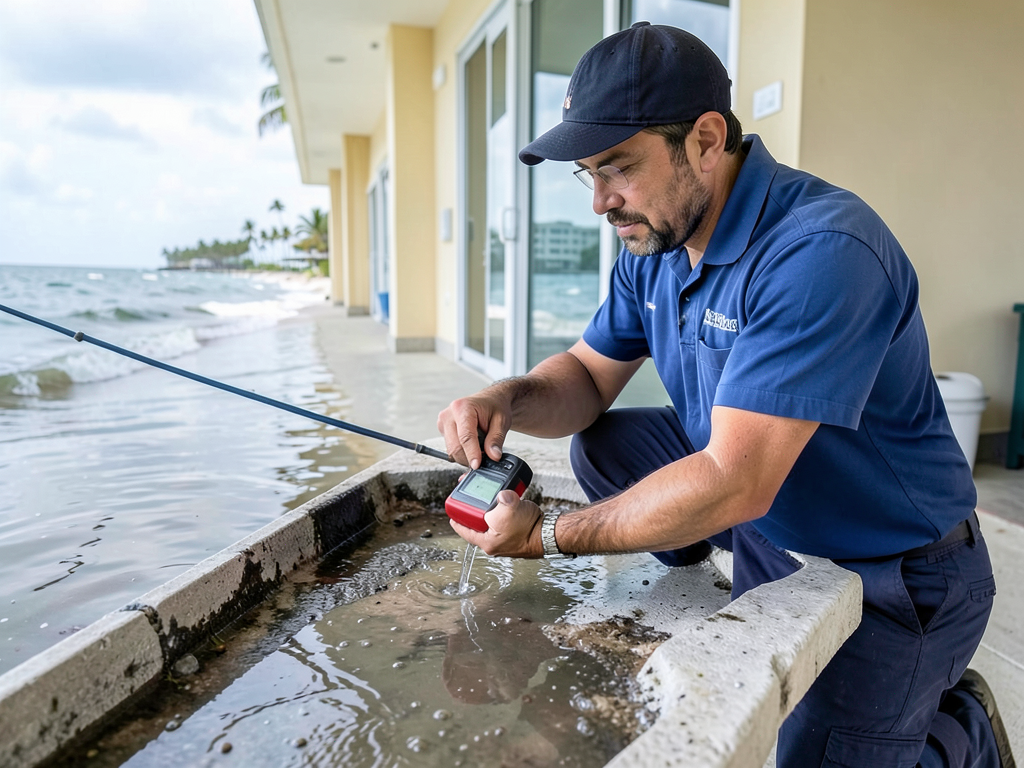
Salt water contains 35 grams of dissolved salts per liter making it 3.5% salinity. This salt concentration creates electrochemical reactions that accelerate corrosion. Steel rebar in concrete foundations starts corroding within 48 hours of salt water exposure. The corrosion process expands creating cracks that allow more water infiltration.. Read more about How to get water out of your Doral office elevator pit fast.
Salt water also acts as a desiccant drawing moisture from the air. This hygroscopic property means salt water soaked materials stay damp longer than fresh water damaged materials. Extended moisture exposure creates ideal conditions for black mold growth within 24-48 hours according to EPA guidelines.
Electrical systems face unique risks from salt water. Salt crystals form conductive pathways on circuit boards and wiring. This creates short circuits and fire hazards even after visible water recedes. HVAC units exposed to salt water require complete system replacement rather than repair.
Common entry points for King Tide salt water
Ground floor sliding glass doors represent the most common failure point during King Tides. Water pressure of 1.5 pounds per square inch pushes against door seals. Most residential sliding doors fail at 2-3 pounds per square inch pressure creating gaps for water entry.
Floor drains become entry points when storm surge creates reverse flow. Miami Beach’s combined sewer system cannot handle tidal backflow. Salt water enters through toilets, showers, and floor drains creating black water contamination situations. Rapid storm damage repairs for Coconut Grove homeowners after a heavy rain.
Cracks in concrete slabs wider than 1/16 inch allow water seepage. Miami’s high water table already creates slab moisture issues. King Tides increase hydrostatic pressure forcing water through existing cracks and creating new ones through freeze-thaw cycling of salt crystals.
Air conditioning units mounted on ground floors flood when condensate drain pans overflow. Salt water damages compressor bearings and electrical controls. Most ground mounted units fail completely after salt water exposure requiring full replacement.
Immediate steps after King Tide flooding
Safety comes first after salt water intrusion. Turn off electricity at the main breaker if water reaches electrical outlets or appliances. Salt water conducts electricity creating shock hazards. Wear rubber boots and gloves when entering flooded areas.
Document everything before cleanup begins. Take photos of water levels, damaged items, and affected areas. This documentation proves crucial for insurance claims. FEMA requires proof of damage for National Flood Insurance Program coverage. FEMA National Flood Insurance Program.
Remove salt water within 24 hours using industrial pumps. Salt water left standing accelerates corrosion and mold growth. Professional restoration companies use desalinization equipment to neutralize salt residue on surfaces.
Discard porous materials that contacted salt water. Carpet, upholstered furniture, and drywall absorb salt and cannot be fully desalinized. These materials become mold breeding grounds within 48 hours.
- Safety Assessment
Check for electrical hazards and structural damage before entry. Turn off power if water reaches outlets.
- Documentation
Photograph all damage from multiple angles. Include water level markers and affected contents.
- Water Removal
Use pumps to remove standing salt water within 24 hours. Time matters for corrosion prevention.
- Material Removal
Discard porous items that absorbed salt water. Focus on health hazards from mold growth.
- Professional Assessment
Call restoration experts to evaluate structural integrity and electrical safety.
Professional restoration process for salt water damage
Professional restoration follows IICRC S500 standards for salt water remediation. The process differs significantly from fresh water damage due to salt’s corrosive properties. Restoration companies use specialized desalinization chemicals that neutralize salt residue on surfaces.
Moisture meters detect hidden water in walls and under flooring. Salt water migrates horizontally through materials creating hidden damage pockets. Thermal imaging cameras identify temperature differences indicating moisture presence behind surfaces.
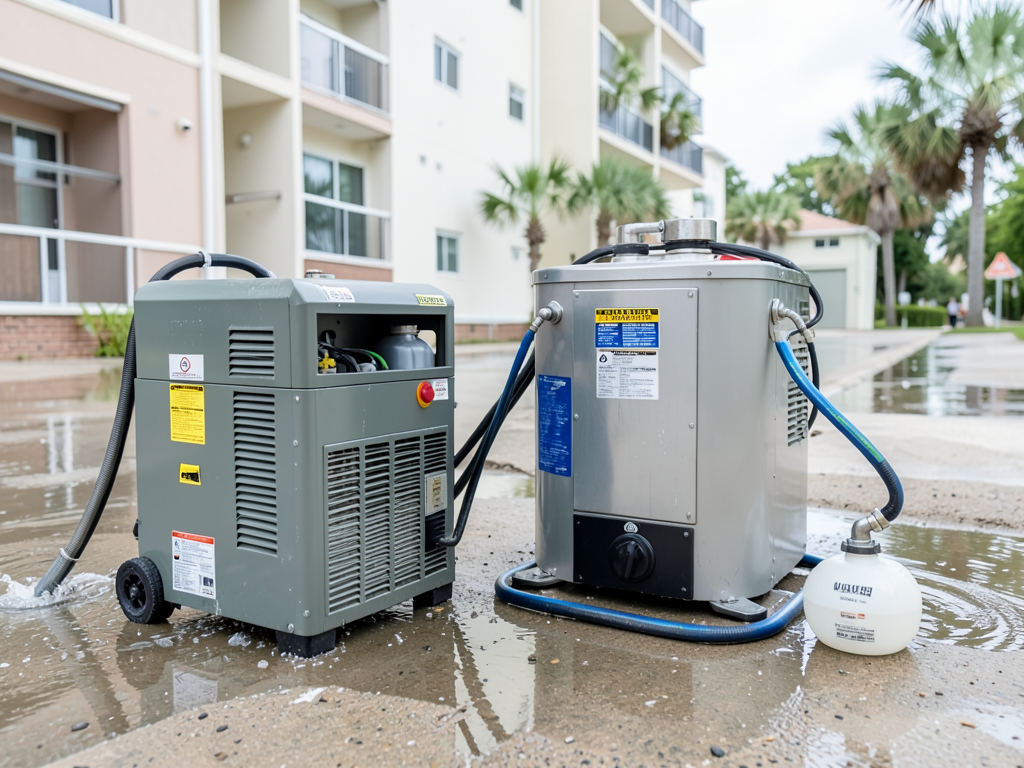
Structural drying requires industrial dehumidifiers operating at 40% relative humidity. Miami’s natural humidity of 75-85% complicates drying efforts. Desiccant dehumidifiers remove moisture more effectively than standard refrigerant units in coastal environments.
Electrical systems require complete inspection after salt water exposure. Even if equipment powers on, internal corrosion may create fire hazards. Licensed electricians test all outlets, switches, and appliances before reconnection.
Odor neutralization addresses the musty smell that persists after salt water flooding. Ozone generators and hydroxyl machines break down odor molecules at the molecular level. Simple air fresheners cannot eliminate salt water odors.
Long-term mitigation strategies for Miami Beach properties
Backflow prevention valves stop reverse flow through plumbing systems during high tides. These valves install on main sewer lines and cost $1,200-2,500 depending on property size. Miami-Dade County code now requires backflow prevention for new construction in flood zones.
Flood barriers provide temporary protection during King Tide events. Sandbags work but require labor and storage space. Modern flood barriers deploy automatically when water rises and cost $3,000-8,000 for ground floor protection.
Mechanical system elevation prevents salt water damage to expensive equipment. Water heaters, furnaces, and electrical panels should sit at least 2 feet above base flood elevation. This elevation protects equipment from most King Tide events.
Foundation waterproofing extends beyond simple sealants. Professional waterproofing involves exterior membrane systems and interior drainage channels. Costs range from $5,000-15,000 but prevent recurring damage from hydrostatic pressure.
Smart water sensors provide early warning of salt water intrusion. These devices connect to smartphone apps and alert property owners when water levels rise. Early detection allows faster response reducing damage severity.
Insurance considerations for King Tide damage
Standard homeowners insurance excludes flood damage. National Flood Insurance Program policies through FEMA cover King Tide flooding but exclude contents damage. Separate contents coverage costs $500-1,000 annually for $50,000 in protection.
Commercial properties need business interruption insurance for King Tide events. Lost revenue from closures can exceed physical damage costs. Policies covering $100,000 in interruption cost $1,200-2,500 annually.
Documenting damage properly affects claim approval. Insurance adjusters look for pre-existing conditions versus new damage. Professional restoration companies provide detailed reports that support insurance claims.
Time limits affect coverage eligibility. NFIP policies have 60-day waiting periods before coverage activates. Properties damaged before policy purchase receive no coverage for those events.
Building code requirements for flood zone properties
Miami-Dade County enforces strict elevation requirements in flood zones. New construction must elevate first floors at least 1 foot above base flood elevation. This requirement protects against most King Tide events but not extreme scenarios.
Freeboard requirements add extra height above minimum standards. Miami Beach requires 1.5 feet of freeboard in high velocity hurricane zones. This additional height provides margin against sea level rise and extreme tides.
Foundation design must account for hydrostatic pressure. Slab-on-grade construction requires reinforcement and drainage systems. Stem wall foundations with crawl spaces allow water to flow under structures reducing pressure against walls.
Electrical code requirements mandate GFCI protection in flood prone areas. All outlets below base flood elevation need ground fault circuit interrupter protection. This requirement prevents electrical shock hazards during flooding.
Mechanical equipment elevation follows specific code sections. Water heaters and furnaces must sit on platforms or in elevated mechanical rooms. The exact height depends on flood zone designation and building use.
Neighborhood specific vulnerabilities in Miami Beach
South Beach experiences the most severe King Tide flooding due to its low elevation and proximity to Biscayne Bay. Ocean Drive properties face flooding from both ocean and bay sides during extreme tides. The area’s aging infrastructure cannot handle current water volumes.
North Beach’s higher elevation provides some protection but older buildings lack modern floodproofing. Properties along Collins Avenue experience street flooding that seeps into ground floor units. The area’s drainage system dates to the 1950s and cannot handle current demands.
Mid-Beach properties benefit from slightly higher ground but face unique challenges. Many buildings sit on former mangrove swamps that compress over time. This subsidence creates low spots where water accumulates during King Tides.
West Avenue corridor properties face bay-side flooding from Indian Creek. The creek overflows during King Tides backing up through storm drains. Properties along this corridor need enhanced flood protection measures.
Sunset Harbour development includes modern flood protection but surrounding older properties create vulnerabilities. Water flows from adjacent properties into the development during extreme events. The area needs coordinated flood management across property lines.
Future outlook for King Tide flooding in Miami Beach
Sea level rise accelerates King Tide impacts. NOAA projects 1-2 feet of sea level rise by 2050 in Southeast Florida. This rise increases King Tide flooding frequency from annual to monthly events for many properties. NOAA Tide Predictions.
Infrastructure improvements lag behind flooding frequency. Miami Beach’s $500 million drainage improvement project addresses current flooding but not future sea level rise. The system needs continuous upgrades to remain effective.
Building codes evolve with flooding patterns. Miami-Dade County updates elevation requirements every 5 years based on new data. Properties built to current codes may need retrofits as standards change.
Climate adaptation requires property owner participation. Individual mitigation measures complement public infrastructure improvements. Properties without owner investment face increasing damage risks.
Economic impacts extend beyond property damage. King Tide flooding affects tourism, property values, and insurance availability. The cumulative economic cost drives policy changes and adaptation investments.
Frequently Asked Questions
How long does salt water damage last in buildings?
Salt water damage continues for months after flooding ends. Corrosion processes accelerate in humid environments. Professional desalinization and moisture monitoring prevent long-term structural damage.
Can I clean up salt water damage myself?
DIY cleanup addresses visible water but misses hidden damage. Salt water requires specialized equipment for complete removal. Professional restoration prevents mold growth and structural deterioration.
How much does salt water restoration cost?
Restoration costs range from $3,000-15,000 depending on damage extent. Salt water remediation costs 30-50% more than fresh water damage due to specialized requirements and material replacement needs.
Does homeowners insurance cover King Tide flooding?
Standard policies exclude flood damage. NFIP flood insurance covers King Tide flooding but requires separate contents coverage. Commercial properties need additional business interruption coverage.
How can I prevent King Tide flooding in my Miami Beach property?
Prevention combines backflow valves, flood barriers, and mechanical system elevation. Smart sensors provide early warning. Professional assessment identifies specific vulnerabilities for targeted mitigation.
Take action before the next King Tide
King Tides will return to Miami Beach causing more damage each year. Salt water intrusion threatens your property’s structural integrity and your family’s health. Don’t wait until water fills your ground floor.
Call (786) 789-8282 today to schedule your King Tide vulnerability assessment. Our experts will identify specific risks and recommend cost-effective solutions. We serve all Miami Beach neighborhoods with 24/7 emergency response.
Pick up the phone and call (786) 789-8282 before the next storm hits. Salt water damage gets worse every hour it sits. Our team arrives within 60 minutes to start protecting your property.
{
“@context”: “https://schema.org”,
“@type”: “BlogPosting”,
“headline”: “How King Tides can cause salt water intrusion in the ground floor of Miami Beach properties”,
“description”: “King Tides flood Miami Beach properties with corrosive salt water. Learn how it damages foundations, HVAC, and electrical systems—and what to do now.”,
“wordCount”: 2004,
“datePublished”: “2026-04-03T13:38:00.000Z”,
“dateModified”: “2026-04-03T13:38:00.000Z”,
“inLanguage”: “en-US”,
“mainEntityOfPage”: {
“@type”: “WebPage”,
“@id”: “https://fortresswaterdamagerestorationmiami.com”
},
“publisher”: {
“@type”: “LocalBusiness”,
“name”: “Fortress Water Damage Restoration Miami”,
“url”: “https://fortresswaterdamagerestorationmiami.com”
},
“author”: {
“@type”: “Organization”,
“name”: “Fortress Water Damage Restoration Miami”,
“url”: “https://fortresswaterdamagerestorationmiami.com”
},
“image”: {
“@type”: “ImageObject”,
“url”: “https://fortresswaterdamagerestorationmiami.com/wp-content/uploads/2026/03/how-king-tides-can-cause-salt-water-intrusion-in-t-1.png”
}
}
{
“@context”: “https://schema.org”,
“@type”: “LocalBusiness”,
“name”: “Fortress Water Damage Restoration Miami”,
“url”: “https://fortresswaterdamagerestorationmiami.com”,
“address”: {
“@type”: “PostalAddress”,
“addressLocality”: “Miami”
},
“areaServed”: {
“@type”: “City”,
“name”: “Miami”
}
}
{
“@context”: “https://schema.org”,
“@type”: “FAQPage”,
“mainEntity”: [
{
“@type”: “Question”,
“name”: “How long does salt water damage last in buildings?”,
“acceptedAnswer”: {
“@type”: “Answer”,
“text”: “Salt water damage continues for months after flooding ends. Corrosion processes accelerate in humid environments. Professional desalinization and moisture monitoring prevent long-term structural damage.”
}
},
{
“@type”: “Question”,
“name”: “Can I clean up salt water damage myself?”,
“acceptedAnswer”: {
“@type”: “Answer”,
“text”: “DIY cleanup addresses visible water but misses hidden damage. Salt water requires specialized equipment for complete removal. Professional restoration prevents mold growth and structural deterioration.”
}
},
{
“@type”: “Question”,
“name”: “How much does salt water restoration cost?”,
“acceptedAnswer”: {
“@type”: “Answer”,
“text”: “Restoration costs range from $3,000-15,000 depending on damage extent. Salt water remediation costs 30-50% more than fresh water damage due to specialized requirements and material replacement needs.”
}
},
{
“@type”: “Question”,
“name”: “Does homeowners insurance cover King Tide flooding?”,
“acceptedAnswer”: {
“@type”: “Answer”,
“text”: “Standard policies exclude flood damage. NFIP flood insurance covers King Tide flooding but requires separate contents coverage. Commercial properties need additional business interruption coverage.”
}
},
{
“@type”: “Question”,
“name”: “How can I prevent King Tide flooding in my Miami Beach property?”,
“acceptedAnswer”: {
“@type”: “Answer”,
“text”: “Prevention combines backflow valves, flood barriers, and mechanical system elevation. Smart sensors provide early warning. Professional assessment identifies specific vulnerabilities for targeted mitigation.”
}
}
]
}
{
“@context”: “https://schema.org”,
“@type”: “HowTo”,
“name”: “Emergency King Tide Response”,
“step”: [
{
“@type”: “HowToStep”,
“position”: 1,
“name”: “Safety Assessment”,
“text”: “Check for electrical hazards and structural damage before entry. Turn off power if water reaches outlets.”
},
{
“@type”: “HowToStep”,
“position”: 2,
“name”: “Documentation”,
“text”: “Photograph all damage from multiple angles. Include water level markers and affected contents.”
},
{
“@type”: “HowToStep”,
“position”: 3,
“name”: “Water Removal”,
“text”: “Use pumps to remove standing salt water within 24 hours. Time matters for corrosion prevention.”
},
{
“@type”: “HowToStep”,
“position”: 4,
“name”: “Material Removal”,
“text”: “Discard porous items that absorbed salt water. Focus on health hazards from mold growth.”
},
{
“@type”: “HowToStep”,
“position”: 5,
“name”: “Professional Assessment”,
“text”: “Call restoration experts to evaluate structural integrity and electrical safety.”
}
],
“image”: “https://fortresswaterdamagerestorationmiami.com/wp-content/uploads/2026/03/how-king-tides-can-cause-salt-water-intrusion-in-t-1.png”
}
{
“@context”: “https://schema.org”,
“@type”: “BreadcrumbList”,
“itemListElement”: [
{
“@type”: “ListItem”,
“position”: 1,
“name”: “Home”,
“item”: “https://fortresswaterdamagerestorationmiami.com”
},
{
“@type”: “ListItem”,
“position”: 2,
“name”: “Blog”,
“item”: “https://fortresswaterdamagerestorationmiami.com/blog”
},
{
“@type”: “ListItem”,
“position”: 3,
“name”: “How King Tides can cause salt water intrusion in the ground floor of Miami Beach properties”
}
]
}
{
“@context”: “https://schema.org”,
“@type”: “Service”,
“serviceType”: “Water Damage Restoration”,
“provider”: {
“@type”: “LocalBusiness”,
“name”: “Fortress Water Damage Restoration Miami”,
“url”: “https://fortresswaterdamagerestorationmiami.com”
},
“areaServed”: {
“@type”: “City”,
“name”: “Miami”
},
“description”: “King Tides flood Miami Beach properties with corrosive salt water. Learn how it damages foundations, HVAC, and electrical systems—and what to do now.”
}