menu

Water Heater Burst Cleanup in Miami – 60-Minute Emergency Response Stops Flooding Fast

When your water heater ruptures, you need immediate water heater burst cleanup crews on-site to prevent structural damage, mold growth, and electrical hazards before your home floods completely.

Slider Image 1
Slider Image 2
Slider Image 3
Slider Image 4
Slider Image 5
Slider Image 7
Slider Image 8
Slider Image 9
Slider Image 10
Slider Image 11

Your Water Heater Just Burst and Miami's Heat Is Making Everything Worse

You heard the crack. Now water is pouring across your floor, soaking into drywall, cabinets, and subflooring. Your water heater holds 40 to 80 gallons, and when it ruptures, that volume hits your home in minutes. In Miami's 80-percent average humidity, wet materials do not dry on their own. They absorb moisture, swell, and begin breeding mold within 24 to 48 hours.

Miami homes face unique risks during burst hot water tank cleanup. Most properties sit on porous limestone, which means water does not just pool on the surface. It seeps into foundation cracks and migrates laterally through walls. Homes built on concrete slabs see water spread quickly across tile and laminate, reaching bedrooms and living areas before you can grab towels. Older properties in Coral Gables and Miami Shores often have cast iron or galvanized piping that corrodes faster in Florida's mineral-heavy water, increasing rupture risk.

Emergency water heater water removal is not about mopping up. You need industrial extraction to pull water from carpet padding, subfloor cavities, and wall interiors before secondary damage sets in. Every hour you wait, moisture migrates deeper. Drywall wicks water upward. Baseboards buckle. Electrical outlets become hazards. Water heater flood damage restoration requires speed, commercial-grade equipment, and knowledge of Miami's building materials and coastal climate conditions.

Ruptured water heater cleanup services must address both visible flooding and hidden saturation. If you can see water, assume twice that volume is hidden in structural cavities.

Your Water Heater Just Burst and Miami's Heat Is Making Everything Worse
How We Stop Water Damage Before It Becomes Structural Failure

How We Stop Water Damage Before It Becomes Structural Failure

We do not just extract water. We map moisture penetration using thermal imaging cameras and pin-type moisture meters to locate saturation you cannot see. Water travels through wall cavities, under baseboards, and into adjacent rooms through shared floor joists. We measure moisture content in wood framing, drywall, and concrete to determine extraction depth and drying time.

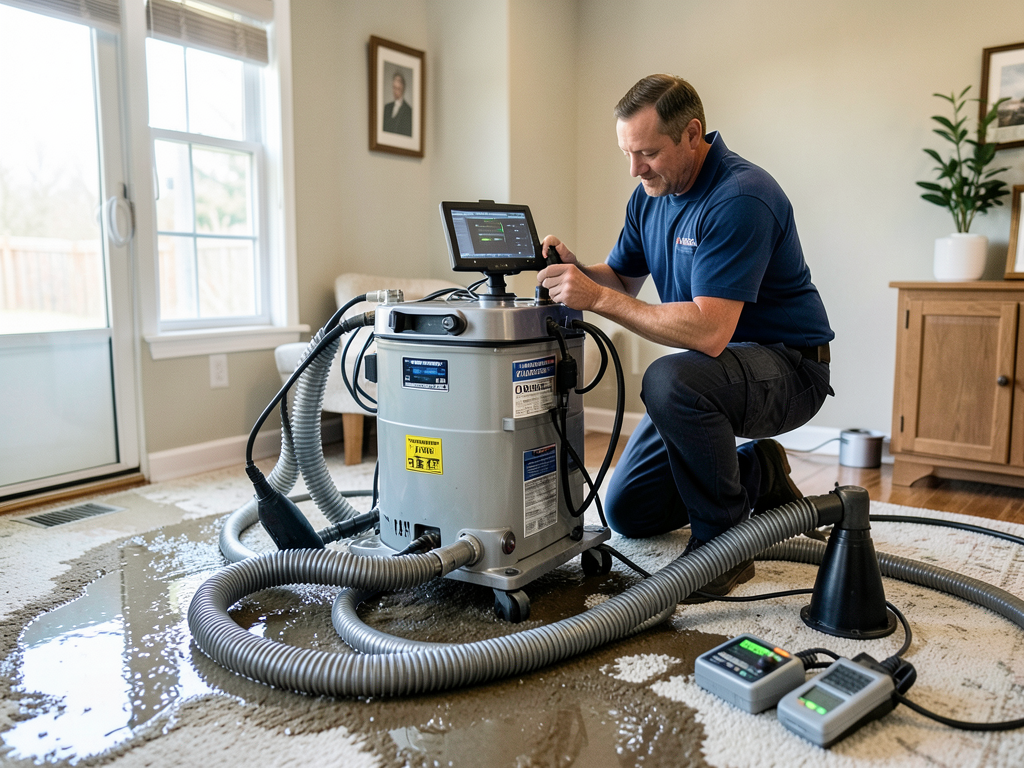
Our burst water heater extraction process uses truck-mounted extractors, not shop vacuums. These units generate 400 CFM of suction, pulling water from carpet backing, padding, and subfloor in a single pass. For tile and concrete, we use weighted extraction wands that create a vacuum seal, removing water trapped in grout lines and slab microfractures.

After extraction, we deploy low-grain refrigerant dehumidifiers and axial air movers. Dehumidifiers pull moisture from the air faster than Miami's ambient humidity can replace it. Air movers create evaporation across wet surfaces, forcing moisture out of porous materials. We do not guess at drying time. We monitor relative humidity and material moisture levels daily using psychrometers and moisture mapping software.

For water heater flood damage restoration, we inspect surrounding systems. We check electrical panels for water intrusion, test GFCI outlets near the water heater, and assess insulation in wall cavities. If your water heater sat in a utility closet or garage, we verify that water did not reach HVAC ductwork or migrate into insulation batts, which trap moisture and require removal.

We document every step with photo evidence, moisture readings, and equipment logs for your insurance claim. Most carriers require third-party verification of drying progress, and we provide daily updates with data.

What Happens When You Call for Emergency Water Heater Cleanup

Water Heater Burst Cleanup in Miami – 60-Minute Emergency Response Stops Flooding Fast
01

Immediate Water Shutoff

Our crew arrives within 60 minutes and immediately locates your main water shutoff valve to stop additional flooding. We assess the water heater rupture point, check for gas line hazards if you have a gas unit, and verify electrical disconnection. We then deploy containment barriers to prevent water from spreading into unaffected rooms while beginning emergency extraction.
02

Full Moisture Mapping

We use thermal imaging and moisture meters to map water penetration through walls, subfloors, and adjoining spaces. This identifies hidden saturation in drywall, insulation, and structural framing. We measure moisture content in wood, concrete, and composite materials to establish baseline readings, which guide our drying strategy and help your insurance adjuster understand the full scope of damage.
03

Certified Dry Verification

We continue monitoring and drying until all materials reach their dry standard moisture levels, typically 12 to 15 percent for wood and under 1 percent for concrete. Once verified, we provide a certificate of drying completion with final moisture readings and photographic documentation. This certification protects you from future mold claims and satisfies insurance requirements for proper mitigation.

Why Miami Homeowners Trust Local Water Damage Experts

You need a crew that understands Miami construction. Homes here are built differently than those in the Midwest or Northeast. Most properties sit on concrete slabs with no basement, which means water spreads horizontally across large surface areas. Tile flooring is common, and water migrates through grout lines into the mortar bed beneath. If that layer stays wet, tiles crack and pop loose within weeks.

We know Miami's micro-neighborhoods. Properties in Coconut Grove often have terrazzo flooring, which requires specialized drying to prevent etching and discoloration. Homes in Pinecrest and Kendall frequently have wood laminate that delaminates if not dried within 48 hours. We have worked in every zip code and know which materials are salvageable and which require replacement.

Miami-Dade County enforces strict mold remediation protocols under Florida Statute 468, Part XVII. If mold growth exceeds 10 square feet, licensed mold remediators must handle removal. We coordinate with licensed contractors and work within compliance frameworks to keep your project legal and insurable. We also understand Florida's insurance claim timelines. You have two years to file a property damage claim under Florida Statute 95.11, but insurers often require notification within days of the loss. We document everything in real time.

Our crews are familiar with Miami's older plumbing systems. Many homes built before 1975 have galvanized steel piping, which corrodes from the inside out. If your water heater burst due to sediment buildup or pressure valve failure, we inspect connected lines for similar wear. Catching a secondary failure before it happens saves you from a second emergency call.

What You Can Expect During Emergency Water Heater Cleanup

60-Minute Response Time

We dispatch crews 24 hours a day, seven days a week. When your water heater ruptures at 2 a.m., you get the same rapid response as a midday call. Our trucks carry extraction equipment, air movers, dehumidifiers, and moisture detection tools, so we begin mitigation immediately. Most water heater bursts require three to five days of active drying, but we stop the flooding and begin extraction within the first hour. Speed determines whether you face a cleanup project or a full reconstruction.

Comprehensive Damage Assessment

We inspect every affected area, not just the visible flooding. Our technicians check wall cavities, crawl spaces, and adjacent rooms for moisture migration. We document damage with photographs, moisture readings, and detailed notes for your insurance claim. You receive a written assessment within 24 hours that outlines affected materials, recommended repairs, and estimated drying time. This report helps your adjuster understand the scope and prevents disputes over covered damage.

Dry, Certified, Ready

We do not leave until your home is dry. Our technicians measure moisture levels daily and adjust equipment placement to optimize airflow and dehumidification. When materials reach their dry standard, we provide a certificate of completion with final moisture readings. This document proves your property is safe from mold growth and satisfies insurance requirements. You get a home that is structurally sound, not just visually dry.

Insurance Coordination and Documentation

We work directly with your insurance carrier to streamline the claims process. Our estimates align with Xactimate pricing, which most adjusters use for damage valuation. We provide daily progress reports, equipment logs, and moisture charts that satisfy claim documentation requirements. If your carrier disputes coverage, we supply the technical data needed to justify mitigation costs. You focus on getting back to normal. We handle the paperwork.

Frequently Asked Questions

You Have Questions,
We Have Answers

What do you do when your water heater bursts? +

Shut off the water supply immediately. Locate the shutoff valve on the cold water line above the tank and turn it clockwise. Next, cut power to the unit. For electric heaters, flip the breaker. For gas, turn the valve to off. Do not touch standing water near electrical outlets. Call a 24/7 water damage restoration team in Miami right away. The longer water sits in Miami's humidity, the faster mold grows. Professionals extract water, dry structural materials, and prevent secondary damage. Document everything with photos for your insurance claim before cleanup begins.

How much is a 40 gallon water heater worth in scrap? +

A 40-gallon water heater typically yields $7 to $15 in scrap value, depending on current metal prices and the scrapyard. The tank contains steel and sometimes a small amount of copper in the heating element. However, after a burst, your priority is water damage cleanup, not scrap value. Standing water in Miami homes creates mold in 24 to 48 hours due to high humidity. Focus on emergency water extraction and structural drying first. Once the damage is controlled, a restoration company can haul away the failed unit as part of the cleanup process.

What to do when a hot water heater blows? +

Turn off the water supply and power source immediately. Do not approach the unit if water is near electrical outlets or the breaker box. Evacuate the area if you smell gas. A burst or blown water heater can flood your home with 40 to 80 gallons fast. In Miami's heat and humidity, water damage escalates quickly. Call a professional water damage restoration team within the first hour. They will extract standing water, assess structural damage, and deploy industrial dryers and dehumidifiers. Document all damage with photos before anyone touches anything. This protects your insurance claim.

Can I do laundry with a broken water heater? +

You should not do laundry with a broken water heater if the unit has burst or is leaking. A damaged heater can cause flooding, electrical hazards, and pressure issues in your plumbing system. If water is actively pooling in your Miami home, prioritize emergency water extraction over laundry. Running water through compromised pipes can worsen damage. Wait until a licensed plumber confirms the system is safe and a water damage restoration team has dried out affected areas. Mold growth starts in 24 hours in Miami's humid climate, so address the water damage first.

How rare is it for a water heater to explode? +

True explosions are rare but happen when pressure relief valves fail and sediment buildup causes overheating. Most water heaters rupture or burst instead, flooding your home. Explosions are more common in older units without proper maintenance or temperature-pressure relief valves. In Miami, hard water and mineral deposits accelerate sediment buildup, increasing risk. Regular flushing and annual inspections reduce the chance of catastrophic failure. If your water heater bursts, the real danger is rapid flooding. Call a water damage restoration specialist immediately to prevent mold growth and structural damage in Miami's high-humidity environment.

Can I take a shower with a broken water heater? +

Do not take a shower if your water heater is broken or leaking. If the unit has burst, water is flooding your home and the electrical system may be compromised. Standing water near outlets or the breaker panel creates electrocution risk. Additionally, a failed water heater may leak gas or contaminated water. If you are in Miami and your water heater has failed, evacuate the area and call a 24/7 water damage restoration team. Wait until a licensed plumber confirms the system is safe and all water damage is mitigated before using plumbing fixtures again.

What is the lifespan of a 40-gallon water heater? +

A 40-gallon water heater lasts 8 to 12 years on average, but Miami's hard water and high humidity can shorten that lifespan. Sediment buildup from mineral-heavy water accelerates tank corrosion. If your unit is over 10 years old, inspect it annually for rust, leaks, or unusual noises. Flushing the tank yearly removes sediment and extends life. When a water heater fails in Miami, it can flood your home fast. If your unit bursts, call a water damage restoration company immediately. Do not wait. Mold grows in 24 hours in South Florida's climate.

Is there copper inside of a hot water heater? +

Yes, water heaters contain copper tubing in the heating element, heat exchanger coils, and sometimes in fittings and connectors. The amount varies by model, but copper is a key component for heat transfer. However, after a water heater bursts in your Miami home, scrap value is not your concern. Standing water damages flooring, drywall, and framing fast. High humidity accelerates mold growth within 24 to 48 hours. Your priority is emergency water extraction, structural drying, and preventing secondary damage. Let professionals handle the cleanup and disposal of the failed unit during the restoration process.

How much money can you make from scrapping a water heater? +

You can make $10 to $20 scrapping a water heater, depending on metal prices and copper content. Scrapyards pay for the steel tank and any copper components. However, if your water heater burst in Miami, scrapping it should be your last concern. A 40-gallon unit can flood your home in minutes. Miami's humidity fuels mold growth in 24 hours. Focus on shutting off water and power, then call a 24/7 water damage restoration company immediately. Professionals extract water, dry structural materials, and haul away the failed unit as part of the cleanup service.

Does insurance cover a water heater explosion? +

Most homeowners insurance policies cover sudden water heater failures if the damage is accidental and sudden, not from neglect or lack of maintenance. If your water heater bursts and floods your Miami home, your policy may cover water extraction, structural drying, flooring replacement, and mold remediation. However, insurers require immediate action to mitigate damage. Call a water damage restoration company right away to document the loss and start emergency water removal. Take photos before cleanup begins. Review your policy for coverage limits and deductibles, and file your claim within 24 hours of the incident.

Why Miami's Limestone Foundation Makes Water Heater Flooding More Dangerous

Miami sits on porous oolitic limestone, which absorbs water like a sponge. When your water heater bursts, water does not just pool on your floor. It seeps into foundation cracks, migrates laterally through capillary action, and saturates adjacent rooms through shared slab connections. Homes in Coral Gables, Coconut Grove, and Miami Shores see water travel 15 to 20 feet from the rupture point within hours. This geological reality makes emergency water heater water removal more complex than in cities with clay or shale substrates. You need extraction that addresses both surface flooding and subsurface saturation.

Miami-Dade County building codes require water heaters installed after 2005 to include pressure relief valves and seismic straps, but older homes often lack these safeguards. If you live in a pre-2000 property, your water heater may not meet current safety standards, increasing rupture risk. We know these local code nuances and inspect for compliance during cleanup. Our crews have handled ruptured water heater cleanup services in every Miami neighborhood, from Brickell high-rises to single-family homes in Pinecrest. Local expertise matters when your insurance adjuster questions whether damage was preventable.
Water Damage Restoration Services in The Miami Area

Fortress proudly serves the entire Miami area and nearby neighborhoods with prompt, expert water damage restoration services. Whether you're located downtown, in the suburbs, or along the coast, our team is just a call away. Use the map below to view our service area and get directions to our office. We’re local, responsive, and ready to help 24/7—because when disaster strikes, having a trusted team nearby makes all the difference.

Address:
Fortress Water Damage Restoration Miami, 3250 NE 1st Ave, Miami, FL, 33137

Additional Services We Offer

Our news updates

Latest Articles & News from The Blogs

How to Tell the Difference Between Dry Rot and Active Water Damage in Little Havana\nWalking through your Little Havana home…

How to Tell the Difference Between Dry Rot and Active Water Damage in Little Havana

How to Tell the Difference Between Dry Rot and Active Water Damage in Little Havana\nWalking through your Little Havana home…

Are Your New Solar Panels Causing Roof Leaks in Your Kendall Home?

Are Your New Solar Panels Causing Roof Leaks in Your Kendall Home? If you’ve noticed water stains on your ceiling…

How Saltwater Intrusion Corrodes Key Biscayne Home Foundations Over Time

How Saltwater Intrusion Corrodes Key Biscayne Home Foundations Over Time Living on Key Biscayne means enjoying waterfront views and ocean…

Contact Us

Every minute counts when your water heater bursts. Call (786) 789-8282 now for 60-minute emergency response. Our crews are standing by 24/7 with truck-mounted extraction equipment and industrial drying systems. Stop the damage before it becomes structural failure.