
Preventing Permanent Stains on Marble and Travertine Floors After a Flood in Coral Gables
Floodwater on marble or travertine floors in Coral Gables creates a perfect storm for permanent damage. These natural stone surfaces are porous and highly sensitive to minerals, acids, and prolonged moisture exposure. Within 24-48 hours, floodwater can cause etching, mineral deposits, and deep-set staining that destroys the stone’s finish. The humid South Florida climate only accelerates the problem by slowing evaporation and encouraging mold growth in stone pores. What to do right now if your Coral Gables home is flooding.
Immediate action with proper pH-neutral cleaning and professional-grade extraction equipment prevents etching and mineral buildup. Standard household cleaners like vinegar or bleach will permanently damage these calcium-based stones. The key is rapid response using techniques specific to the high-end Mediterranean Revival homes common in Coral Gables, where marble and travertine are architectural signatures. Rapid storm damage repairs for Coconut Grove homeowners after a heavy rain.
Why Coral Gables Stone Floors Are Vulnerable to Flood Damage
Coral Gables Mediterranean Revival architecture features extensive marble and travertine flooring, particularly in historic neighborhoods like the Biltmore Area and along Alhambra Circle. These stones have a porosity rating of 0.5-2.0%, meaning they absorb water and dissolved minerals readily. When floodwater from Coral Gables’ aging infrastructure or storm surge enters homes, it carries calcium, magnesium, and iron compounds that deposit as unsightly white stains when the water evaporates. Professional water extraction for Doral commercial properties and warehouses.
The problem compounds with Miami-Dade’s hard water, which has a hardness level of 200-300 ppm. This mineral content accelerates staining and creates a cycle where repeated cleaning with tap water actually worsens the damage. The high humidity in Coral Gables, averaging 75% year-round, prevents proper drying and allows moisture to wick deeper into stone pores, causing efflorescence and potential structural weakening of the subfloor. Commercial Water Damage Restoration.
Understanding Stone Damage: Etching vs. Staining vs. Efflorescence
Flood damage to marble and travertine manifests in three distinct ways. Etching occurs when acidic floodwater or cleaning products react with the calcium carbonate in the stone, creating dull, rough spots that cannot be wiped away. Staining happens when colored substances penetrate the pores, creating dark or discolored areas. Efflorescence appears as white, powdery deposits on the surface when mineral-laden water evaporates from within the stone.
The diagnostic test involves checking the surface texture and reaction to water. Place a few drops of distilled water on the affected area. If it darkens immediately, you have a stain. If it creates a dull spot that doesn’t wipe away, you have etching. If white powder appears after drying, you’re dealing with efflorescence. This distinction determines whether you need professional honing and polishing or can address the issue with targeted cleaning. Dealing with a burst pipe in your historic Little Havana bungalow.
Immediate Response Protocol for Flooded Stone Floors
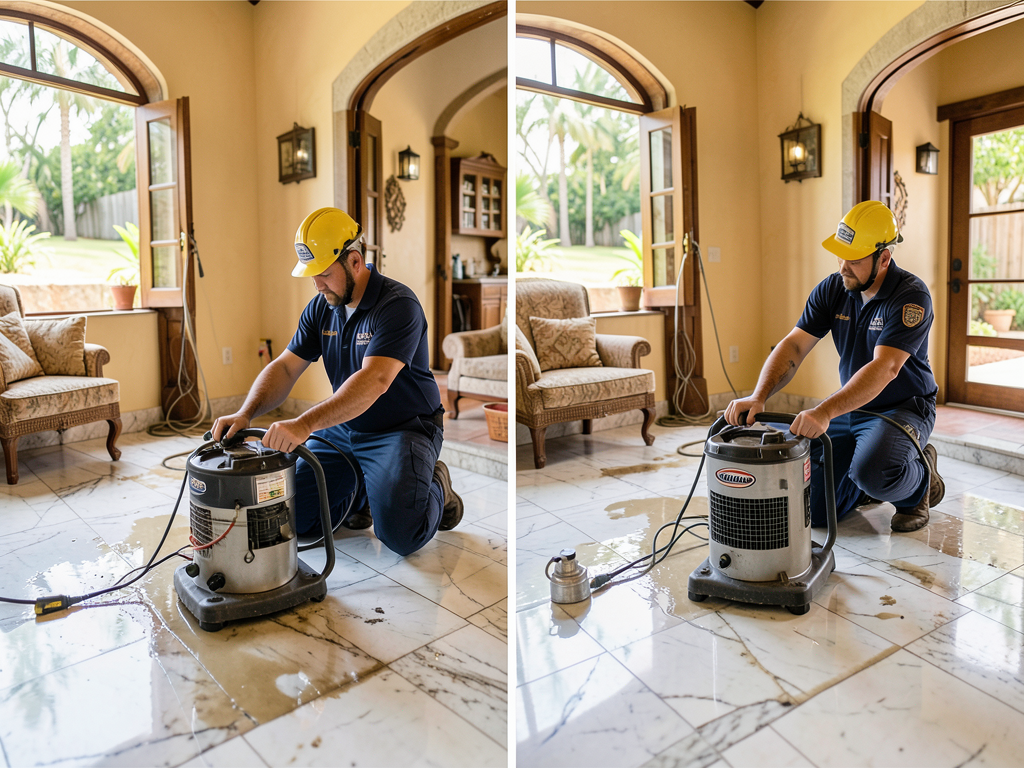
Time is critical when marble or travertine floors flood. The first 24 hours determine whether you’ll need complete restoration or simple cleaning. Begin by removing standing water with a wet vacuum or professional extraction equipment. Never use a regular household vacuum as it can short-circuit and spread contamination.
Place industrial air movers at 45-degree angles to create cross-ventilation across the floor surface. This prevents moisture from settling into stone pores. Monitor humidity levels with a hygrometer; target readings below 60% to prevent mold growth. For homes in the 33134 and 33146 zip codes, where older plumbing is common, check adjacent rooms for water migration through shared walls.
Document all damage with photos before any cleaning begins. This documentation proves invaluable for insurance claims through companies like State Farm or Citizens Property Insurance, which frequently cover homes in Coral Gables’ historic districts. Keep a record of affected areas, including baseboards and transition strips where water often travels unseen.
pH-Neutral Cleaning: The Non-Negotiable First Step
pH-neutral cleaners are essential for marble and travertine because these stones have a pH of around 9-10. Using acidic cleaners (pH below 7) or alkaline cleaners (pH above 11) will immediately begin etching the surface. The Florida Department of Environmental Protection recommends cleaners with a pH between 7-8 for natural stone surfaces. EPA mold remediation guidelines.
Mix a pH-neutral stone cleaner at the manufacturer’s recommended dilution ratio. Apply with a microfiber mop, working in small sections to prevent the cleaner from drying on the surface. For flood damage, you may need to clean the same area multiple times to remove all mineral deposits and contaminants. The cleaning process should take 2-3 times longer than you expect for complete mineral removal.
Rinse thoroughly with distilled water to prevent reintroducing hard water minerals. Hard water from Coral Gables’ municipal supply contains dissolved solids that will redeposit on the stone surface. After rinsing, use a wet vacuum to remove all standing water, then dry with air movers for at least 24 hours before assessing the final condition.
Professional Stone Restoration: When DIY Isn’t Enough
Professional restoration becomes necessary when etching covers more than 10% of the surface or when mineral deposits penetrate deeper than 1/16 inch. The IICRC S500 standard for professional water damage restoration requires specialized equipment for stone recovery, including diamond abrasive pads and industrial-grade sealers.
Professional technicians use a multi-step process beginning with deep cleaning using alkaline cleaners to remove embedded minerals. Next comes honing with diamond abrasives to remove the damaged surface layer. For marble, this typically removes 1/64 to 1/32 inch of material. Travertine often requires filling small holes with color-matched epoxy before honing.
The final polishing step restores the stone’s natural shine using progressively finer diamond pads. This process can take 2-5 days for a typical Coral Gables living room, depending on the extent of damage and the stone’s original finish. Professional sealing with impregnating sealers provides protection against future staining while maintaining the stone’s natural appearance.. Read more about The Safest Ways to Protect High-Value Art Collections in Wynwood During a Water Emergency.
Preventing Future Damage: Sealing and Maintenance Strategies
High-quality impregnating sealers create a hydrophobic barrier that repels water while allowing the stone to breathe. For Coral Gables’ humid climate, choose sealers specifically formulated for high-moisture environments. These products typically cost $30-50 per quart and cover 200-400 square feet per application.
Apply sealer using a low-pressure sprayer or microfiber applicator, working in small sections. Allow the sealer to penetrate for 5-10 minutes, then remove excess with clean microfiber cloths. The surface should feel dry to touch within 2-4 hours but requires 24-48 hours to fully cure. Test effectiveness by placing water droplets on the sealed surface; they should bead up rather than absorb.
Establish a maintenance routine using pH-neutral cleaners weekly and deep cleaning monthly. Place absorbent mats at entry points to catch moisture from shoes, particularly important in rainy season from May through October. For homes near the Biltmore Golf Course or along the Coral Gables Waterway, where humidity levels are highest, consider running a dehumidifier in stone-floored rooms during peak summer months.
Common Mistakes That Worsen Stone Damage
Many homeowners inadvertently cause more damage when attempting DIY restoration. The most common mistake is using vinegar or lemon juice to clean white stains, which actually etches the marble surface and creates permanent dull spots. Another frequent error is applying topical sealers over dirty or damp stone, which traps moisture and causes discoloration.
Using abrasive cleaning tools like steel wool or scrub brushes with stiff bristles scratches the polished surface, creating microscopic channels where dirt and moisture collect. Even microfiber mops can cause damage if used with improper cleaning solutions. The heat from steam cleaners can cause thermal shock in natural stone, leading to cracking or spalling.
Delaying professional assessment often results in more extensive damage. What begins as surface staining can progress to subfloor moisture damage, mold growth within wall cavities, and structural issues with supporting beams. The cost of addressing these secondary problems often exceeds the original restoration by 300-500%.
Cost Factors and Insurance Considerations
Professional marble and travertine restoration costs vary based on damage extent, stone type, and home location. For a typical 500-square-foot area in Coral Gables, expect to pay $1,500-4,000 for complete restoration including cleaning, honing, polishing, and sealing. Insurance coverage depends on the cause of flooding and your specific policy terms.
Standard homeowners policies typically cover sudden and accidental water damage but exclude gradual seepage or flood damage from external sources. The National Flood Insurance Program (NFIP) provides separate coverage for flood events, with policies averaging $700-1,500 annually for Coral Gables properties. Document all damage thoroughly and obtain multiple professional estimates to support your claim. National Flood Insurance Program.
Consider the long-term value preservation when evaluating restoration costs. Quality stone flooring can represent 5-15% of a home’s value in Coral Gables’ luxury market. Professional restoration not only repairs damage but can actually increase property value by improving the overall condition and appearance of high-end finishes.
Frequently Asked Questions
How long does it take for marble to stain after flooding?
Marble can begin absorbing minerals and developing stains within 2-4 hours of water exposure. The process accelerates in hot, humid conditions common in Coral Gables, where temperatures often exceed 85°F with high humidity. Quick water removal and proper drying are essential to prevent permanent damage.
Can I use bleach to clean mold off marble floors?
No. Bleach is highly alkaline and will etch marble surfaces, creating dull spots and potentially worsening the damage. Use EPA-registered antimicrobial cleaners specifically formulated for natural stone, or contact a professional restoration company for mold remediation on sensitive surfaces.
How often should I seal marble floors in Coral Gables?
In Coral Gables’ humid climate, reseal marble floors every 12-18 months. Test the sealer’s effectiveness annually by placing water droplets on the surface. If water absorbs within 5 minutes instead of beading up, it’s time for reapplication. High-traffic areas may need more frequent sealing.
What’s the difference between honing and polishing marble?
Honing uses diamond abrasives to create a smooth, matte finish by removing the damaged surface layer. Polishing follows honing with progressively finer abrasives to restore shine and reflectivity. Honing addresses etching and deep stains, while polishing enhances the stone’s natural beauty and provides a protective finish.
Is travertine more resistant to water damage than marble?
Travertine is actually more porous than marble, with larger surface holes and a higher absorption rate. However, its calcium carbonate composition reacts similarly to acids and minerals. Both stones require identical care protocols, though travertine often needs more frequent sealing due to its increased porosity.
Protecting Your Investment: The Fortress Shield Approach
At Fortress Water Damage Restoration, we understand that your marble and travertine floors represent both a significant financial investment and a key element of your Coral Gables home’s character. Our technicians are trained in the specific challenges of South Florida’s climate and the unique requirements of Mediterranean Revival architecture.
We use industrial-grade extraction equipment capable of removing water from stone pores that standard shop vacuums cannot reach. Our pH-neutral cleaning solutions are laboratory-tested for compatibility with calcium-based stones. We follow IICRC S500 standards for water damage restoration, ensuring your floors receive the same professional care as luxury hotels and high-end commercial properties.
Don’t let flood damage permanently mar your beautiful stone floors. Call (786) 789-8282 today to schedule your inspection. Our team provides 24/7 emergency response throughout Coral Gables, including the 33134, 33143, and 33146 zip codes. We’ll assess the damage, provide a detailed restoration plan, and work directly with your insurance company to streamline the recovery process.
Pick up the phone and call (786) 789-8282 before the next storm hits. Every hour counts when it comes to protecting your marble and travertine floors from permanent flood damage.
You may also find this helpful. Why a General Contractor is Not the Right Choice for Flooded Homes in The Roads.
You may also find this helpful. How to handle a massive aquarium leak in your University Park living room.
{
“@context”: “https://schema.org”,
“@type”: “BlogPosting”,
“headline”: “Preventing permanent stains on marble and travertine floors after a flood in Coral Gables”,
“description”: “Protect your luxury marble and travertine floors from permanent flood damage in Coral Gables with expert water extraction, pH-neutral cleaning, and professional sealing.”,
“wordCount”: 1932,
“datePublished”: “2026-04-09T06:40:00.000Z”,
“dateModified”: “2026-04-09T06:40:00.000Z”,
“inLanguage”: “en-US”,
“mainEntityOfPage”: {
“@type”: “WebPage”,
“@id”: “https://fortresswaterdamagerestorationmiami.com”
},
“publisher”: {
“@type”: “LocalBusiness”,
“name”: “Fortress Water Damage Restoration Miami”,
“url”: “https://fortresswaterdamagerestorationmiami.com”
},
“author”: {
“@type”: “Organization”,
“name”: “Fortress Water Damage Restoration Miami”,
“url”: “https://fortresswaterdamagerestorationmiami.com”
},
“image”: {
“@type”: “ImageObject”,
“url”: “https://fortresswaterdamagerestorationmiami.com/wp-content/uploads/2026/03/preventing-permanent-stains-on-marble-and-traverti-1.png”
}
}
{
“@context”: “https://schema.org”,
“@type”: “LocalBusiness”,
“name”: “Fortress Water Damage Restoration Miami”,
“url”: “https://fortresswaterdamagerestorationmiami.com”,
“address”: {
“@type”: “PostalAddress”,
“addressLocality”: “Miami”
},
“areaServed”: {
“@type”: “City”,
“name”: “Miami”
}
}
{
“@context”: “https://schema.org”,
“@type”: “FAQPage”,
“mainEntity”: [
{
“@type”: “Question”,
“name”: “How long does it take for marble to stain after flooding?”,
“acceptedAnswer”: {
“@type”: “Answer”,
“text”: “Marble can begin absorbing minerals and developing stains within 2-4 hours of water exposure. The process accelerates in hot, humid conditions common in Coral Gables, where temperatures often exceed 85°F with high humidity. Quick water removal and proper drying are essential to prevent permanent damage.”
}
},
{
“@type”: “Question”,
“name”: “Can I use bleach to clean mold off marble floors?”,
“acceptedAnswer”: {
“@type”: “Answer”,
“text”: “No. Bleach is highly alkaline and will etch marble surfaces, creating dull spots and potentially worsening the damage. Use EPA-registered antimicrobial cleaners specifically formulated for natural stone, or contact a professional restoration company for mold remediation on sensitive surfaces.”
}
},
{
“@type”: “Question”,
“name”: “How often should I seal marble floors in Coral Gables?”,
“acceptedAnswer”: {
“@type”: “Answer”,
“text”: “In Coral Gables’ humid climate, reseal marble floors every 12-18 months. Test the sealer’s effectiveness annually by placing water droplets on the surface. If water absorbs within 5 minutes instead of beading up, it’s time for reapplication. High-traffic areas may need more frequent sealing.”
}
},
{
“@type”: “Question”,
“name”: “What’s the difference between honing and polishing marble?”,
“acceptedAnswer”: {
“@type”: “Answer”,
“text”: “Honing uses diamond abrasives to create a smooth, matte finish by removing the damaged surface layer. Polishing follows honing with progressively finer abrasives to restore shine and reflectivity. Honing addresses etching and deep stains, while polishing enhances the stone’s natural beauty and provides a protective finish.”
}
},
{
“@type”: “Question”,
“name”: “Is travertine more resistant to water damage than marble?”,
“acceptedAnswer”: {
“@type”: “Answer”,
“text”: “Travertine is actually more porous than marble, with larger surface holes and a higher absorption rate. However, its calcium carbonate composition reacts similarly to acids and minerals. Both stones require identical care protocols, though travertine often needs more frequent sealing due to its increased porosity.”
}
}
]
}
{
“@context”: “https://schema.org”,
“@type”: “BreadcrumbList”,
“itemListElement”: [
{
“@type”: “ListItem”,
“position”: 1,
“name”: “Home”,
“item”: “https://fortresswaterdamagerestorationmiami.com”
},
{
“@type”: “ListItem”,
“position”: 2,
“name”: “Blog”,
“item”: “https://fortresswaterdamagerestorationmiami.com/blog”
},
{
“@type”: “ListItem”,
“position”: 3,
“name”: “Preventing permanent stains on marble and travertine floors after a flood in Coral Gables”
}
]
}
{
“@context”: “https://schema.org”,
“@type”: “Service”,
“serviceType”: “Water Damage Restoration”,
“provider”: {
“@type”: “LocalBusiness”,
“name”: “Fortress Water Damage Restoration Miami”,
“url”: “https://fortresswaterdamagerestorationmiami.com”
},
“areaServed”: {
“@type”: “City”,
“name”: “Miami”
},
“description”: “Protect your luxury marble and travertine floors from permanent flood damage in Coral Gables with expert water extraction, pH-neutral cleaning, and professional sealing.”
}