
The hidden dangers of flat roof ponding for modern homes in the Miami Design District
Standing water on your flat roof after a Miami thunderstorm is not just an eyesore. It is a warning sign of structural failure that can lead to ceiling leaks, mold growth, and expensive interior water damage. In the Design District’s modern architectural landscape, where flat roofs are common, ponding water creates a perfect storm of accelerated degradation. High humidity and intense UV exposure turn that stagnant water into a thermal cooker that breaks down roofing membranes faster than in cooler climates. If you see water still sitting on your roof 48 hours after the rain stops, you have a problem that needs immediate professional attention. Rapid storm damage repairs for Coconut Grove homeowners after a heavy rain.
What defines ‘ponded’ water on a Miami flat roof
The roofing industry uses a simple rule. If water remains on a flat roof surface for more than 48 hours after rainfall stops, it is classified as ponding water. This is not puddling or temporary pooling. Ponding creates hydrostatic pressure on the roof deck and traps moisture against the membrane. In the Design District’s high-density urban environment, even small drainage clogs from leaves or debris can cause large areas to hold water. The weight of that water adds stress to the structural system. A single inch of standing water across a 500-square-foot area weighs over 2,600 pounds. That is like parking a small car on your roof. Professional water extraction for Doral commercial properties and warehouses.
Why Miami’s climate accelerates ponding damage
Miami’s tropical monsoon climate creates the perfect conditions for rapid roof deterioration. The combination of high heat, intense UV radiation, and constant humidity accelerates the breakdown of roofing materials. When water sits on the surface, it acts like a magnifying glass for UV rays. The heat cooks the membrane from above while the trapped moisture attacks from below. This ‘stewing effect’ can cause single-ply membranes like TPO or PVC to blister, delaminate, and fail within months rather than years. The salt air in coastal areas like the Design District adds another layer of corrosion to metal flashings and fasteners. Miami-Dade County’s High-Velocity Hurricane Zone building codes require specific drainage systems, but even code-compliant roofs can fail if debris blocks scuppers or internal drains. Commercial Water Damage Restoration.
Signs of structural water damage and mold growth
Water from ponding does not always stay on the roof. It finds the path of least resistance. You might notice ceiling stains spreading across your living room ceiling. That brown discoloration is water-soluble tannins from the wood framing bleeding through the drywall. Musty odors in upper floor rooms indicate active mold growth in the ceiling cavity. Walk across the floor above the affected area. If you feel soft spots or deflection in the floor, the roof deck is already compromised. In severe cases, you can see visible sagging in the ceiling or walls. Mold growth accelerates in Miami’s humidity. The Florida Department of Business and Professional Regulation requires licensed mold assessors to evaluate any visible mold covering more than 10 square feet. Florida Building Code.
Our professional restoration process
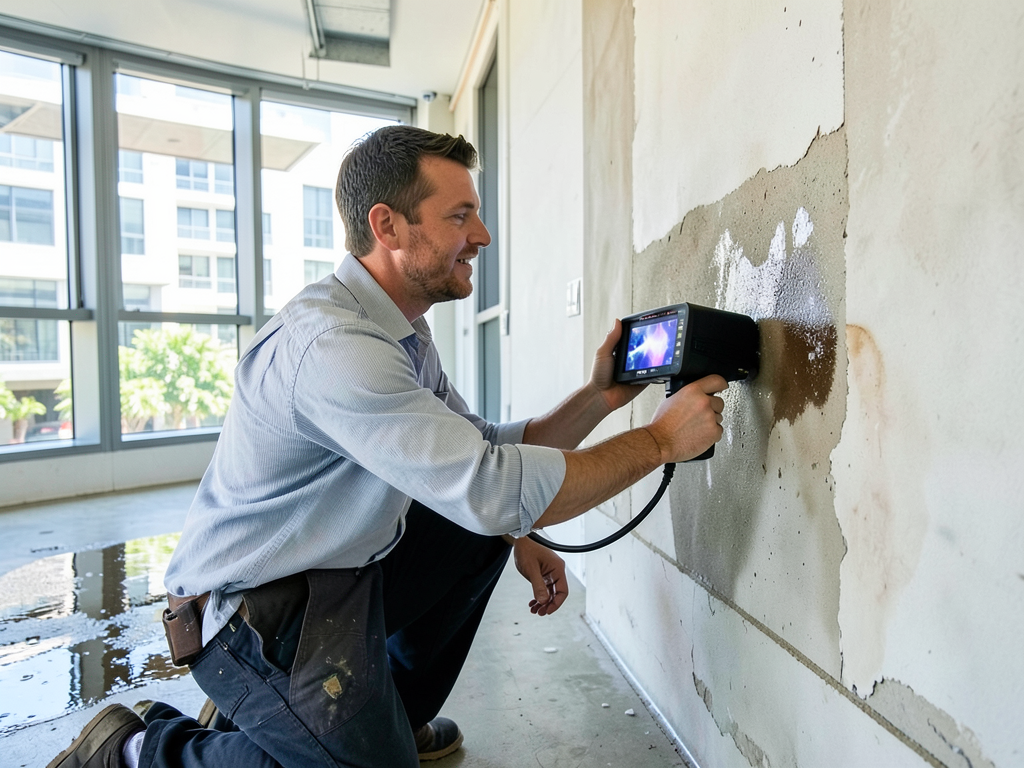
When ponding has caused interior damage, you need more than a roof patch. Our restoration process starts with a comprehensive moisture mapping using thermal imaging cameras. These infrared devices detect temperature differences that reveal hidden water pockets behind walls and under flooring. We then extract standing water using industrial-grade pumps capable of removing thousands of gallons per hour. Next comes structural drying with commercial dehumidifiers and air movers that create a vortex of dry air to pull moisture from building materials. We monitor the process daily with moisture meters to ensure the structure reaches the industry standard of 12-14 percent moisture content for wood framing. Finally, we repair or replace damaged materials and apply antimicrobial treatments to prevent mold recurrence. This process follows the IICRC S500 standard for water damage restoration. IICRC S500 standard.
Miami-Dade building codes and your roof insurance claim
Miami-Dade County enforces strict building standards for flat roofs in the High-Velocity Hurricane Zone. The Florida Building Code requires positive drainage with a minimum slope of 1/4 inch per foot toward drains or scuppers. Secondary drainage systems must be in place to prevent overflow if primary drains clog. When filing an insurance claim for ponding damage, documentation is critical. Take dated photos of the standing water and any interior damage. Keep receipts for any emergency measures like tarping. Your insurance adjuster will reference the Miami-Dade Notice of Acceptance (NOA) for approved roofing materials. Using non-approved materials can void your coverage. Most policies cover sudden and accidental water damage but exclude damage from long-term neglect. That is why prompt professional assessment is essential. Water Damage Restoration Coral Gables.
Secondary damage: Impact on commercial HVAC units
Many Design District buildings have commercial HVAC units mounted on the roof. Ponding water creates several risks for these systems. Standing water can short out electrical components in the condenser unit. The constant moisture exposure accelerates corrosion of the condenser coils and fan motors. In worst cases, the weight of the water combined with the HVAC unit’s weight can cause structural deflection, leading to refrigerant line breaks and costly repairs. Regular maintenance of roof drains and scuppers prevents these secondary failures. Our team inspects the entire roof system including equipment mounts when assessing ponding damage.
Preventing ponding through tapered insulation systems
The best way to prevent ponding is proper roof design from the start. Tapered insulation systems create a slight slope on an otherwise flat surface, directing water toward drains. These systems use foam panels cut at specific angles to achieve the required 1/4 inch per foot slope. In the Design District’s modern buildings, tapered insulation also improves energy efficiency by reducing thermal bridging. If your roof was built without adequate slope, we can retrofit tapered insulation during a restoration project. This eliminates ponding and extends the life of your roofing system. The investment typically pays for itself through avoided water damage repairs and lower cooling costs in Miami’s heat.
Emergency tarping and shrink-wrap services
When ponding has caused a roof breach, you need immediate protection from the next storm. Our emergency tarping service uses 10-mil reinforced polyethylene tarps secured with battens to create a watertight barrier. For large commercial roofs, we offer industrial shrink-wrap services that create a drum-tight seal over the affected area. These emergency measures buy you time to file insurance claims and schedule permanent repairs. We provide 24/7 emergency response throughout Miami-Dade County. The faster you stop the water intrusion, the less secondary damage occurs to your interior finishes and contents.
The cost of delay: Why waiting makes it worse
Every day you delay addressing ponding water increases your restoration costs. Water continues to break down roofing materials, seep into the structure, and create conditions for mold growth. A small leak that could have been patched for a few hundred dollars can turn into a $10,000 interior restoration project if left unchecked. In Miami’s humidity, mold can establish itself in 24 to 48 hours. Once mold colonies form, you need licensed remediation services that follow Florida’s strict containment and disposal protocols. The longer you wait, the more likely you are to face both structural repairs and health hazards.
Frequently Asked Questions
How can I tell if my flat roof has ponding problems
After the next heavy rain, check your roof 48 hours later. If you see standing water in any areas, you have ponding. Look for water marks or algae growth on the roof surface, which indicate recurring ponding. Inside your home, watch for ceiling stains or musty odors on upper floors. Fixing ceiling leaks and water spots in Wynwood art lofts.
Does homeowner’s insurance cover ponding damage
Most policies cover sudden and accidental water damage but not damage from long-term neglect. If ponding has been an ongoing issue, your claim might be denied. Document everything with photos and get a professional assessment immediately after discovering the problem.
How long does professional water damage restoration take
The timeline depends on the extent of damage. Emergency water extraction happens within hours. Structural drying typically takes 3 to 5 days with commercial equipment. Repairs to finishes like drywall and flooring add another week or more. We provide a detailed schedule after our initial assessment.
Take action before the next storm hits
Standing water on your flat roof is not a problem that fixes itself. In Miami’s climate, it gets worse every day. The combination of heat, humidity, and UV exposure creates a perfect storm for structural damage and mold growth. Do not wait until you have a ceiling collapse or respiratory health issues. Call (786) 789-8282 today to schedule your professional inspection. Our team will assess your roof’s drainage system, identify any ponding issues, and provide a clear restoration plan. We serve the entire Miami Design District and surrounding areas with 24/7 emergency response. Pick up the phone and call (786) 789-8282 before the next storm hits. Your home’s structural integrity and your family’s health depend on it.
{
“@context”: “https://schema.org”,
“@type”: “BlogPosting”,
“headline”: “The hidden dangers of flat roof ponding for modern homes in the Miami Design District”,
“description”: “Discover the structural risks of flat roof ponding in Miami’s Design District. Learn how Miami’s climate accelerates damage and what restoration steps protect your home.”,
“wordCount”: 1520,
“datePublished”: “2026-04-06T09:06:00.000Z”,
“dateModified”: “2026-04-06T09:06:00.000Z”,
“inLanguage”: “en-US”,
“mainEntityOfPage”: {
“@type”: “WebPage”,
“@id”: “https://fortresswaterdamagerestorationmiami.com”
},
“publisher”: {
“@type”: “LocalBusiness”,
“name”: “Fortress Water Damage Restoration Miami”,
“url”: “https://fortresswaterdamagerestorationmiami.com”
},
“author”: {
“@type”: “Organization”,
“name”: “Fortress Water Damage Restoration Miami”,
“url”: “https://fortresswaterdamagerestorationmiami.com”
},
“image”: {
“@type”: “ImageObject”,
“url”: “https://fortresswaterdamagerestorationmiami.com/wp-content/uploads/2026/03/the-hidden-dangers-of-flat-roof-ponding-for-modern-1.png”
}
}
{
“@context”: “https://schema.org”,
“@type”: “LocalBusiness”,
“name”: “Fortress Water Damage Restoration Miami”,
“url”: “https://fortresswaterdamagerestorationmiami.com”,
“address”: {
“@type”: “PostalAddress”,
“addressLocality”: “Miami”
},
“areaServed”: {
“@type”: “City”,
“name”: “Miami”
}
}
{
“@context”: “https://schema.org”,
“@type”: “BreadcrumbList”,
“itemListElement”: [
{
“@type”: “ListItem”,
“position”: 1,
“name”: “Home”,
“item”: “https://fortresswaterdamagerestorationmiami.com”
},
{
“@type”: “ListItem”,
“position”: 2,
“name”: “Blog”,
“item”: “https://fortresswaterdamagerestorationmiami.com/blog”
},
{
“@type”: “ListItem”,
“position”: 3,
“name”: “The hidden dangers of flat roof ponding for modern homes in the Miami Design District”
}
]
}
{
“@context”: “https://schema.org”,
“@type”: “Service”,
“serviceType”: “Water Damage Restoration”,
“provider”: {
“@type”: “LocalBusiness”,
“name”: “Fortress Water Damage Restoration Miami”,
“url”: “https://fortresswaterdamagerestorationmiami.com”
},
“areaServed”: {
“@type”: “City”,
“name”: “Miami”
},
“description”: “Discover the structural risks of flat roof ponding in Miami’s Design District. Learn how Miami’s climate accelerates damage and what restoration steps protect your home.”
}