
Deciding Between Repairing or Replacing Your High End Italian Cabinets After a Miami Flood
When Miami’s tropical storms or plumbing failures send water surging through your kitchen or bathroom, your high-end Italian cabinets face a critical test. The decision between restoring these premium fixtures or replacing them entirely depends on several factors unique to South Florida’s climate and building environment. Understanding these variables helps you make the right choice for your home’s value, your family’s health, and your budget. Florida matching statute.
Assessing the Damage: When is Repair Possible?
Water damage severity determines repair viability. Category 1 clean water from a broken supply line causes less structural harm than Category 3 contaminated floodwater from storm surge. The exposure duration matters significantly. Cabinets submerged for hours absorb moisture through joints and veneers, while brief contact might only affect surface finishes. Rapid storm damage repairs for Coconut Grove homeowners after a heavy rain.
Material composition plays a crucial role in repair decisions. Solid wood cabinets, common in premium Italian cabinetry, often withstand water exposure better than engineered materials. The dense grain structure resists warping when dried properly. However, prolonged saturation causes swelling, joint separation, and finish delamination even in quality hardwoods. Professional water extraction for Doral commercial properties and warehouses.
Particle board and medium-density fiberboard (MDF) used in many modern cabinets react differently to moisture. These materials swell quickly and lose structural integrity. Once MDF expands beyond its original dimensions, joints fail and surfaces become permanently distorted. The hygroscopic nature of these materials makes them particularly vulnerable in Miami’s high-humidity environment.
Professional assessment using moisture meters provides objective data about internal saturation levels. Readings above 16% moisture content indicate significant absorption requiring specialized drying equipment. Thermal imaging cameras reveal hidden moisture pockets behind cabinet backs and under toe kicks where water migrates during flooding events. Commercial Water Damage Restoration.
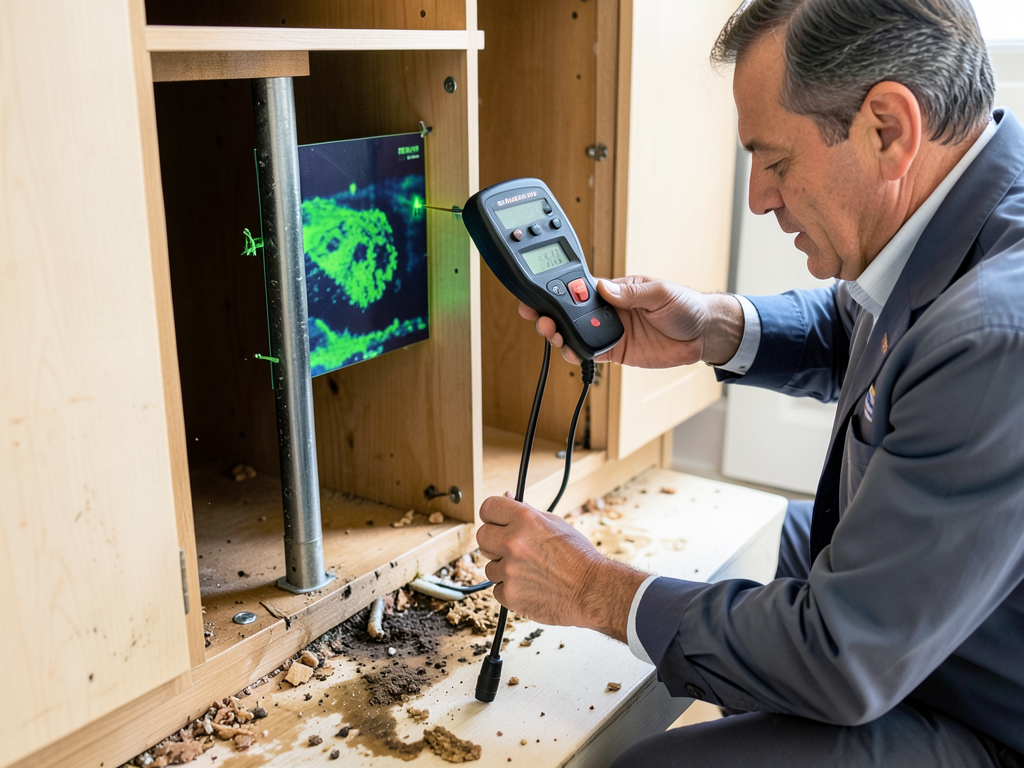
Image description: Moisture meter technician measuring cabinet base moisture levels after flood damage, showing digital readout and thermal imaging scan of cabinet structure.
Signs You Must Replace Your Kitchen or Bathroom Cabinets
Certain damage indicators make replacement the only safe option. Mold growth visible on cabinet surfaces or detected through musty odors signals extensive contamination. Stachybotrys chartarum, commonly called black mold, thrives in the warm, humid conditions found behind water-damaged cabinetry in Miami homes. Water Damage Restoration Coral Gables.
Structural failure manifests through several warning signs. Cabinet doors that no longer close properly indicate warping beyond repairable limits. Drawer slides that bind or fail to operate smoothly suggest frame distortion. Visible separation at miter joints or corner blocks demonstrates adhesive bond failure from moisture exposure.
Finish deterioration provides clear evidence of damage extent. Bubbling or peeling veneers expose underlying substrate to continued moisture damage. Color changes in wood grain often indicate mold colonization within the material structure. These surface failures typically correlate with deeper structural problems.
The 48-hour rule applies to flood-damaged cabinets. Water exposure beyond two days creates conditions favorable for mold spore colonization. Even if cabinets appear salvageable, hidden contamination poses health risks. The warm South Florida climate accelerates microbial growth compared to temperate regions.
Insurance considerations influence replacement decisions. Florida’s “matching” statutes require insurers to replace all cabinets if damaged units cannot be matched exactly. This regulation protects homeowners from having mismatched cabinetry after partial replacements. Understanding these requirements helps evaluate total replacement costs versus restoration expenses.
The Miami Factor: Humidity, Salt Air, and Mold Proliferation
South Florida’s tropical climate creates unique challenges for water-damaged cabinetry. Miami’s average relative humidity exceeds 75% year-round, providing ideal conditions for mold growth even after initial drying. The combination of heat and moisture accelerates wood degradation and microbial colonization.
Coastal salt air exposure compounds water damage problems. Salt crystals attract and retain moisture from the humid air, creating a continuous cycle of dampness that prevents complete drying. Cabinets near windows or exterior walls in coastal neighborhoods like Miami Beach face accelerated deterioration from salt-induced corrosion of metal hardware and fasteners.
The oolitic limestone bedrock underlying much of Miami-Dade County affects groundwater behavior. This porous rock allows water to migrate upward through slab foundations, creating persistent moisture sources that can re-saturate cabinets from below. Properties in areas like Coral Gables with high water tables face ongoing moisture challenges. What to do right now if your Coral Gables home is flooding.
Miami-Dade County’s building code requirements for flood-resistant construction impact cabinet replacement decisions. New installations must meet elevation standards and moisture-resistant specifications. These requirements may necessitate modifications to existing kitchen layouts when replacing extensively damaged cabinetry.
The hurricane season from June through November increases flood risk throughout Miami. Storm surge and heavy rainfall events can overwhelm drainage systems, particularly in low-lying areas near Biscayne Bay. Understanding these seasonal patterns helps homeowners prepare for potential water damage scenarios.
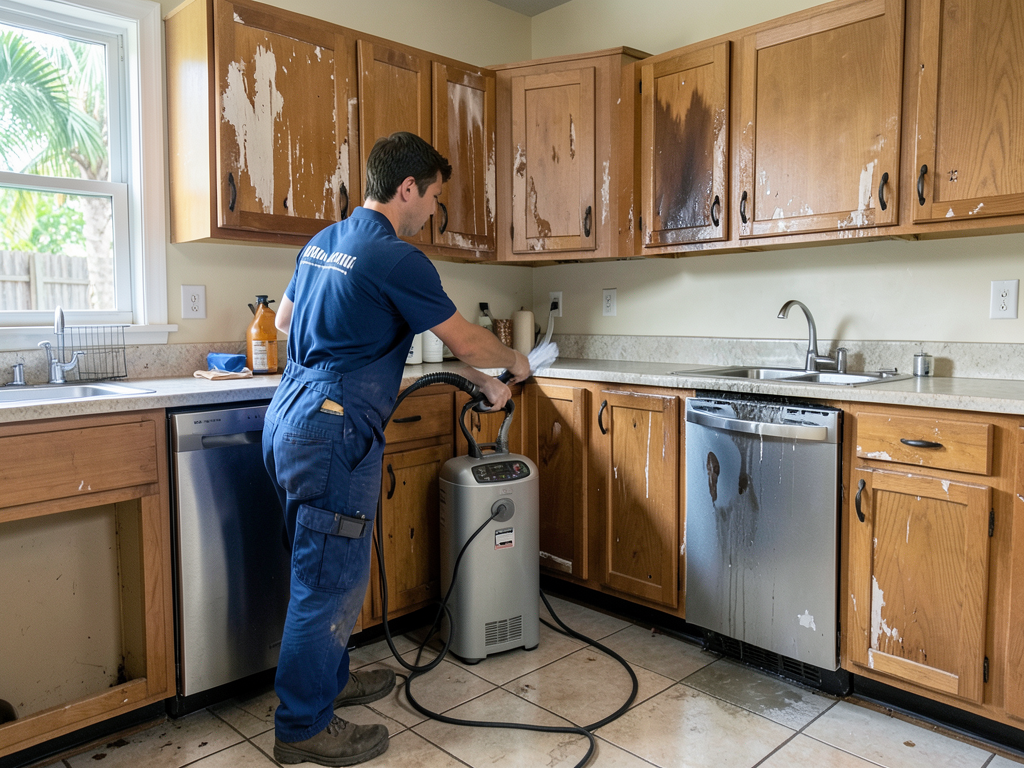
Image description: Technician using industrial-grade dehumidifiers and air movers to dry water-damaged kitchen cabinets in a Miami home after flooding event.
Cost Analysis: Restoration vs. Full Replacement
Restoration costs vary significantly based on damage extent and cabinet materials. Professional drying and cleaning of salvageable cabinets typically ranges from $1,500 to $4,000 for an average kitchen. This process includes moisture extraction, antimicrobial treatment, and finish restoration. However, these costs assume successful structural recovery.
Replacement expenses depend on cabinet quality and kitchen size. High-end Italian cabinetry can cost $500 to $1,500 per linear foot installed. A complete kitchen replacement often ranges from $15,000 to $50,000 or more. The wide price range reflects material choices, design complexity, and installation requirements.
Hidden costs affect both options. Restoration may require temporary kitchen facilities during the drying process. Replacement often involves plumbing and electrical modifications, countertop removal and reinstallation, and potential layout changes to meet current building codes.
Insurance coverage limitations impact financial decisions. Most policies cover sudden and accidental water damage but exclude gradual deterioration or maintenance-related failures. Understanding your specific coverage helps evaluate out-of-pocket expenses for either restoration or replacement.
Long-term value considerations favor replacement in many cases. New cabinets come with manufacturer warranties and meet current energy efficiency standards. Modern materials offer better moisture resistance than older construction methods. These factors contribute to improved home value and reduced future maintenance costs.
- Document All Damage
Photograph every affected area and create a detailed inventory of damaged items before beginning cleanup.
- Obtain Multiple Professional Assessments
Get evaluations from certified restoration specialists and cabinet refacing companies to compare options.
- Review Insurance Policy Details
Understand coverage limits, deductibles, and matching requirements that affect your financial responsibility.
- Calculate Total Project Costs
Include demolition, disposal, temporary facilities, and potential structural repairs beyond cabinet work.
- Consider Long-term Value
Factor in warranty coverage, energy efficiency improvements, and potential home value increases.
Navigating Insurance Claims for Cabinet Water Damage
Florida insurance regulations create specific requirements for water damage claims. The state mandates that insurers handle claims promptly and fairly, with specific timelines for acknowledgment, inspection, and payment decisions. Understanding these requirements helps manage expectations during the claims process.
Documentation proves essential for successful claims. Detailed photographs showing water levels, damage extent, and affected areas support your case. Keep receipts for emergency services like water extraction and temporary repairs. Create a written timeline of events from initial discovery through mitigation efforts.
Public adjusters offer valuable assistance for complex claims. These licensed professionals advocate for your interests during the settlement process. Their expertise in policy interpretation and damage valuation often results in higher settlements than homeowners achieve independently.
The matching requirement in Florida creates unique claim scenarios. If damaged cabinets cannot be matched exactly, insurers must either find acceptable substitutes or replace all affected cabinetry. This regulation prevents situations where partial replacements create aesthetic inconsistencies throughout your kitchen.
Depreciation calculations affect claim settlements. Insurance companies often factor age and condition into damage valuations. High-end Italian cabinets may retain more value than standard cabinetry, potentially resulting in better settlements for premium fixtures.
Time limitations affect claim filing. Florida law requires prompt notification of water damage to insurers. Delays beyond 14 days may result in coverage denials based on failure to mitigate damages. Understanding these deadlines helps protect your claim rights.
Professional Inspection vs. DIY Assessment
Professional inspectors bring specialized equipment and expertise to damage evaluation. Moisture meters detect water penetration beyond visible surfaces. Thermal imaging reveals temperature variations indicating hidden moisture. These tools provide objective data that guides restoration or replacement decisions.
DIY assessments often miss critical damage indicators. Surface dryness does not guarantee internal moisture elimination. Mold growth can occur within cabinet cavities even when exterior surfaces appear unaffected. The combination of heat and humidity in Miami creates conditions where problems develop rapidly.
Professional certifications indicate inspection quality. IICRC-certified technicians follow industry standards for water damage assessment and restoration. Their training includes proper use of diagnostic equipment and understanding of microbial growth patterns specific to South Florida’s climate. IICRC.
Health and safety considerations favor professional evaluation. Mold exposure poses respiratory risks, particularly for children, elderly individuals, and those with compromised immune systems. Professional inspectors use personal protective equipment and containment procedures to prevent cross-contamination during assessments.
Insurance companies often require professional documentation for claim approval. DIY assessments may not meet insurer requirements for damage verification. Professional reports with moisture mapping, photographic evidence, and remediation recommendations strengthen claim submissions.
Cost-benefit analysis supports professional inspection investment. The expense of expert evaluation typically ranges from $200 to $500 but can prevent costly mistakes in restoration or replacement decisions. This investment often pays for itself through more accurate damage assessment and appropriate remediation planning.
Making Your Final Decision
Several factors should guide your cabinet restoration or replacement choice. Damage extent and material composition determine technical feasibility. Budget constraints and insurance coverage affect financial viability. Long-term value considerations influence investment decisions.
Time constraints matter for many homeowners. Restoration typically requires 3-7 days for complete drying and treatment. Replacement projects often extend 2-4 weeks when accounting for demolition, installation, and finishing work. Understanding these timelines helps plan for kitchen downtime.
Quality expectations influence satisfaction with either option. Restoration may not return cabinets to their original condition, particularly for extensive damage. Replacement guarantees new materials and construction methods but may not match existing kitchen aesthetics.
Environmental considerations affect decision-making. Restoration preserves existing materials and reduces landfill waste. However, replacement with modern, moisture-resistant materials may provide better long-term sustainability through improved durability and energy efficiency.
Professional consultation provides valuable perspective. Restoration specialists can evaluate salvage potential objectively. Cabinet makers understand replacement options and costs. Insurance adjusters explain coverage implications. Combining these perspectives helps make informed decisions.
The emotional attachment to high-end Italian cabinetry often influences decisions. These premium fixtures represent significant investments and aesthetic choices. Understanding restoration limitations helps manage expectations while preserving valued features when possible.
Local building codes affect replacement options. Miami-Dade County requires specific moisture resistance and elevation standards for new installations. These requirements may necessitate design modifications that impact overall project scope and cost.
Future flood risk should influence decisions. Properties in flood-prone areas may benefit from replacement with more water-resistant materials. Understanding local flood maps and drainage patterns helps evaluate long-term protection needs.
Call (786) 789-8282 today to schedule your inspection. Our certified technicians provide comprehensive assessments and help you make the right choice for your Miami home. Don’t wait until hidden damage becomes a costly problem.
Image description: Before and after comparison of water-damaged Italian kitchen cabinets showing mold remediation and restoration versus complete replacement options.
Frequently Asked Questions
How long does water damage take to cause permanent cabinet damage?
Water exposure beyond 24-48 hours typically causes irreversible damage to cabinet materials. Particle board and MDF swell within hours, while solid wood may survive longer but still risks warping and joint failure after prolonged saturation.
Can mold grow inside cabinets that look dry on the outside?
Yes. Moisture can remain trapped inside cabinet cavities even when exterior surfaces appear dry. Miami’s high humidity accelerates mold growth in these hidden spaces, making professional moisture testing essential for proper assessment.
Does homeowners insurance cover cabinet water damage in Miami?
Most policies cover sudden and accidental water damage but exclude gradual deterioration or maintenance issues. Coverage extent depends on your specific policy terms, deductible amounts, and whether matching requirements apply to your situation.
How can I prevent future water damage to my cabinets?
Install water leak detectors near appliances, maintain proper AC drainage, seal cabinet bases with waterproof materials, and consider moisture-resistant materials for high-risk areas. Regular plumbing inspections help identify potential failure points before they cause damage.
What’s the difference between cabinet restoration and refacing?
Restoration repairs existing cabinets while maintaining the original structure. Refacing replaces doors and drawer fronts while covering existing cabinet boxes with new veneer. Refacing works for cabinets with sound structures but outdated appearances.
How do I know if my cabinets have structural damage?
Look for doors that won’t close properly, drawers that stick or fail to operate smoothly, visible warping or separation at joints, and finish deterioration like bubbling or peeling. Professional moisture testing provides definitive assessment of internal damage.
Should I replace cabinets in a flood-prone area?
Properties in flood-prone zones benefit from water-resistant materials and elevated installations. Consider marine-grade plywood, stainless steel hardware, and proper sealing to minimize future damage risk in areas with recurring water exposure.
How long does cabinet restoration take compared to replacement?
Professional restoration typically requires 3-7 days for complete drying and treatment. Replacement projects often extend 2-4 weeks when accounting for demolition, installation, and finishing work, plus potential delays for custom cabinetry orders.
{
“@context”: “https://schema.org”,
“@type”: “BlogPosting”,
“headline”: “Deciding Between Repairing or Replacing Your High End Italian Cabinets After a Miami Flood”,
“description”: “Miami homeowners face tough choices after flood damage to Italian cabinetry. Learn when repair works versus full replacement in South Florida’s humid climate.”,
“wordCount”: 2235,
“datePublished”: “2026-06-09T10:45:00.000Z”,
“dateModified”: “2026-06-09T10:45:00.000Z”,
“inLanguage”: “en-US”,
“mainEntityOfPage”: {
“@type”: “WebPage”,
“@id”: “https://fortresswaterdamagerestorationmiami.com”
},
“publisher”: {
“@type”: “LocalBusiness”,
“name”: “Fortress Water Damage Restoration Miami”,
“url”: “https://fortresswaterdamagerestorationmiami.com”
},
“author”: {
“@type”: “Organization”,
“name”: “Fortress Water Damage Restoration Miami”,
“url”: “https://fortresswaterdamagerestorationmiami.com”
},
“image”: {
“@type”: “ImageObject”,
“url”: “https://fortresswaterdamagerestorationmiami.com/wp-content/uploads/2026/03/deciding-between-repairing-or-replacing-your-high-1.png”
}
}
{
“@context”: “https://schema.org”,
“@type”: “LocalBusiness”,
“name”: “Fortress Water Damage Restoration Miami”,
“url”: “https://fortresswaterdamagerestorationmiami.com”,
“address”: {
“@type”: “PostalAddress”,
“addressLocality”: “Miami”
},
“areaServed”: {
“@type”: “City”,
“name”: “Miami”
}
}
{
“@context”: “https://schema.org”,
“@type”: “FAQPage”,
“mainEntity”: [
{
“@type”: “Question”,
“name”: “Assessing the Damage: When is Repair Possible?”,
“acceptedAnswer”: {
“@type”: “Answer”,
“text”: “Water damage severity determines repair viability. Category 1 clean water from a broken supply line causes less structural harm than Category 3 contaminated floodwater from storm surge. The exposure duration matters significantly. Cabinets submerged for hours absorb moisture through joints and veneers, while brief contact might only affect surface finishes. Rapid storm damage repairs for Coconut Grove homeowners after a heavy rain.”
}
},
{
“@type”: “Question”,
“name”: “How long does water damage take to cause permanent cabinet damage?”,
“acceptedAnswer”: {
“@type”: “Answer”,
“text”: “Water exposure beyond 24-48 hours typically causes irreversible damage to cabinet materials. Particle board and MDF swell within hours, while solid wood may survive longer but still risks warping and joint failure after prolonged saturation.”
}
},
{
“@type”: “Question”,
“name”: “Can mold grow inside cabinets that look dry on the outside?”,
“acceptedAnswer”: {
“@type”: “Answer”,
“text”: “Yes. Moisture can remain trapped inside cabinet cavities even when exterior surfaces appear dry. Miami’s high humidity accelerates mold growth in these hidden spaces, making professional moisture testing essential for proper assessment.”
}
},
{
“@type”: “Question”,
“name”: “Does homeowners insurance cover cabinet water damage in Miami?”,
“acceptedAnswer”: {
“@type”: “Answer”,
“text”: “Most policies cover sudden and accidental water damage but exclude gradual deterioration or maintenance issues. Coverage extent depends on your specific policy terms, deductible amounts, and whether matching requirements apply to your situation.”
}
},
{
“@type”: “Question”,
“name”: “How can I prevent future water damage to my cabinets?”,
“acceptedAnswer”: {
“@type”: “Answer”,
“text”: “Install water leak detectors near appliances, maintain proper AC drainage, seal cabinet bases with waterproof materials, and consider moisture-resistant materials for high-risk areas. Regular plumbing inspections help identify potential failure points before they cause damage.”
}
},
{
“@type”: “Question”,
“name”: “What’s the difference between cabinet restoration and refacing?”,
“acceptedAnswer”: {
“@type”: “Answer”,
“text”: “Restoration repairs existing cabinets while maintaining the original structure. Refacing replaces doors and drawer fronts while covering existing cabinet boxes with new veneer. Refacing works for cabinets with sound structures but outdated appearances.”
}
},
{
“@type”: “Question”,
“name”: “How do I know if my cabinets have structural damage?”,
“acceptedAnswer”: {
“@type”: “Answer”,
“text”: “Look for doors that won’t close properly, drawers that stick or fail to operate smoothly, visible warping or separation at joints, and finish deterioration like bubbling or peeling. Professional moisture testing provides definitive assessment of internal damage.”
}
},
{
“@type”: “Question”,
“name”: “Should I replace cabinets in a flood-prone area?”,
“acceptedAnswer”: {
“@type”: “Answer”,
“text”: “Properties in flood-prone zones benefit from water-resistant materials and elevated installations. Consider marine-grade plywood, stainless steel hardware, and proper sealing to minimize future damage risk in areas with recurring water exposure.”
}
},
{
“@type”: “Question”,
“name”: “How long does cabinet restoration take compared to replacement?”,
“acceptedAnswer”: {
“@type”: “Answer”,
“text”: “Professional restoration typically requires 3-7 days for complete drying and treatment. Replacement projects often extend 2-4 weeks when accounting for demolition, installation, and finishing work, plus potential delays for custom cabinetry orders.”
}
}
]
}
{
“@context”: “https://schema.org”,
“@type”: “HowTo”,
“name”: “Cost Comparison Analysis”,
“step”: [
{
“@type”: “HowToStep”,
“position”: 1,
“name”: “Document All Damage”,
“text”: “Photograph every affected area and create a detailed inventory of damaged items before beginning cleanup.”
},
{
“@type”: “HowToStep”,
“position”: 2,
“name”: “Obtain Multiple Professional Assessments”,
“text”: “Get evaluations from certified restoration specialists and cabinet refacing companies to compare options.”
},
{
“@type”: “HowToStep”,
“position”: 3,
“name”: “Review Insurance Policy Details”,
“text”: “Understand coverage limits, deductibles, and matching requirements that affect your financial responsibility.”
},
{
“@type”: “HowToStep”,
“position”: 4,
“name”: “Calculate Total Project Costs”,
“text”: “Include demolition, disposal, temporary facilities, and potential structural repairs beyond cabinet work.”
},
{
“@type”: “HowToStep”,
“position”: 5,
“name”: “Consider Long-term Value”,
“text”: “Factor in warranty coverage, energy efficiency improvements, and potential home value increases.”
}
],
“image”: “https://fortresswaterdamagerestorationmiami.com/wp-content/uploads/2026/03/deciding-between-repairing-or-replacing-your-high-1.png”
}
{
“@context”: “https://schema.org”,
“@type”: “BreadcrumbList”,
“itemListElement”: [
{
“@type”: “ListItem”,
“position”: 1,
“name”: “Home”,
“item”: “https://fortresswaterdamagerestorationmiami.com”
},
{
“@type”: “ListItem”,
“position”: 2,
“name”: “Blog”,
“item”: “https://fortresswaterdamagerestorationmiami.com/blog”
},
{
“@type”: “ListItem”,
“position”: 3,
“name”: “Deciding Between Repairing or Replacing Your High End Italian Cabinets After a Miami Flood”
}
]
}
{
“@context”: “https://schema.org”,
“@type”: “Service”,
“serviceType”: “Water Damage Restoration”,
“provider”: {
“@type”: “LocalBusiness”,
“name”: “Fortress Water Damage Restoration Miami”,
“url”: “https://fortresswaterdamagerestorationmiami.com”
},
“areaServed”: {
“@type”: “City”,
“name”: “Miami”
},
“description”: “Miami homeowners face tough choices after flood damage to Italian cabinetry. Learn when repair works versus full replacement in South Florida’s humid climate.”
}