
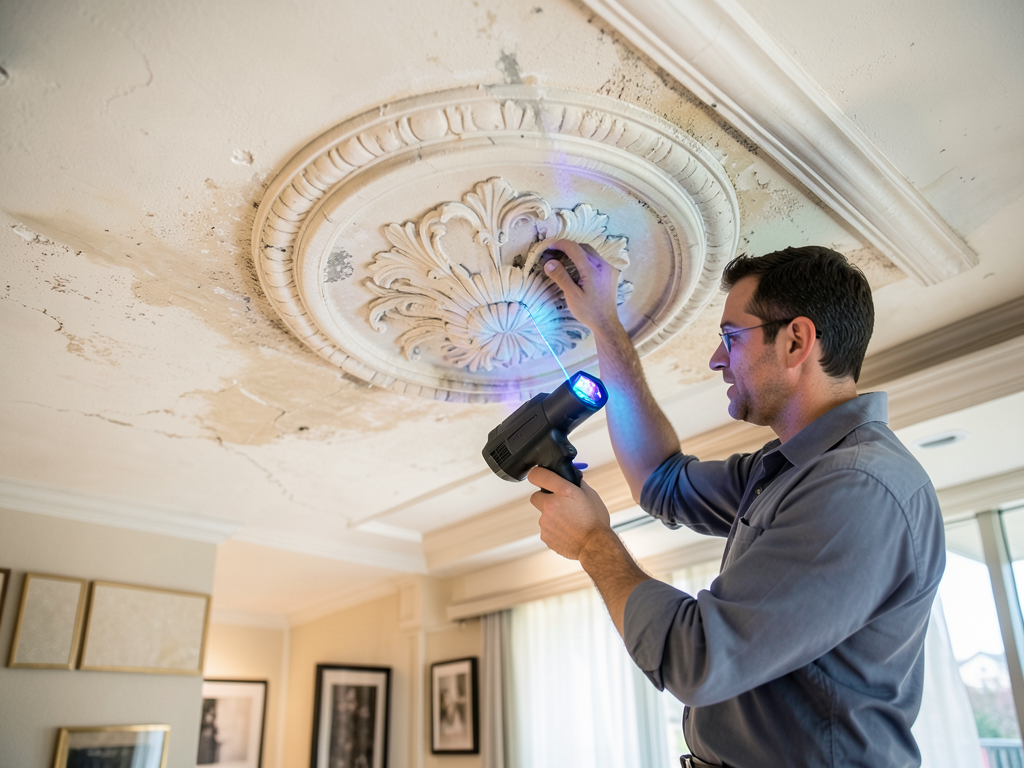
Restoring Water-Damaged Plaster and Detailed Molding in Historic South Beach Hotels
Historic South Beach hotels face unique water damage challenges that demand specialized restoration expertise. The intricate plasterwork, detailed molding, and architectural features that define these Art Deco and Mediterranean Revival structures require preservation-first approaches that standard restoration companies simply cannot provide. When water damage strikes these cultural landmarks, the response must balance rapid mitigation with the meticulous care these irreplaceable details demand. Rapid storm damage repairs for Coconut Grove homeowners after a heavy rain.
Water damage in historic South Beach hotels presents immediate threats to both structural integrity and architectural heritage. The high humidity levels characteristic of Miami Beach accelerate mold growth in water-damaged plaster, while salt air exposure complicates drying processes. Original plaster systems dating back to the 1920s and 1930s often contain horsehair reinforcement and lime-based compounds that react differently to moisture than modern materials. Understanding these material differences proves essential for effective restoration without compromising historic integrity. Professional water extraction for Doral commercial properties and warehouses.
Unique Challenges of Historic South Beach Hotel Restoration
South Beach’s historic hotel district contains over 800 preserved buildings, each presenting distinct restoration challenges. The Art Deco buildings along Ocean Drive feature elaborate plaster cornices, ceiling medallions, and decorative wall panels that cannot be replaced with modern materials. Water damage to these features requires specialized techniques that preserve original craftsmanship while ensuring structural stability. Fixing ceiling leaks and water spots in Wynwood art lofts.
Mediterranean Revival hotels in the Espanola Way area present different challenges with their stucco exteriors, arched windows, and decorative tile work. These structures often sit on oolite limestone foundations that absorb groundwater, creating chronic moisture issues that affect interior plaster systems. The porous nature of oolite allows water migration through foundation walls, requiring specialized drainage solutions that do not disturb historic foundations. Commercial Water Damage Restoration.
Many South Beach hotels operate as active businesses while restoration occurs, adding complexity to water damage response. Guests expect minimal disruption, requiring restoration teams to work during off-hours and contain dust and debris effectively. The need to maintain business operations while performing delicate restoration work demands exceptional project management and communication skills.. Read more about Fixing Water Damage in Historic Miami Churches Without Ruining the Architecture.
Technical Restoration Process for Historic Plaster and Molding
The restoration process begins with comprehensive moisture mapping using infrared thermography and moisture meters calibrated for historic materials. Standard moisture readings often fail to detect trapped moisture in horsehair plaster systems, requiring technicians to use multiple detection methods. Thermal imaging reveals temperature variations that indicate moisture presence behind decorative molding and in wall cavities.
Non-invasive drying techniques prove essential for preserving historic plaster. Traditional air movement methods can cause rapid moisture migration that leads to cracking and delamination of original plaster. Instead, desiccant dehumidification and targeted heat drying allow controlled moisture removal that prevents structural damage. The process requires monitoring relative humidity levels at multiple depths within wall assemblies.. Read more about Desiccant Dehumidifiers vs Conventional Dryers for Getting the Humidity Out of a Miami Home.
Mold remediation in historic plaster systems demands specialized approaches. The EPA’s Mold Remediation in Schools and Commercial Buildings guidelines provide the framework, but historic structures require modifications to preserve original materials. HEPA filtration and containment prevent cross-contamination while allowing selective cleaning of decorative moldings. Some historic plaster can be salvaged through careful cleaning and sealing rather than complete replacement. EPA Mold Remediation in Schools and Commercial Buildings.
Material-Specific Care for Historic Restoration
Dade County Pine, the original wood used in many South Beach structures, presents unique restoration challenges. This now-protected wood species offers natural resistance to rot and insects but requires specific treatment when water-damaged. The wood’s density and resin content affect how it absorbs and releases moisture, requiring longer drying times than modern lumber. Restoration specialists must understand these material properties to prevent warping and splitting during the drying process.
Original masonry in South Beach hotels often includes coral rock and brick that require different treatment than modern concrete block. These materials allow moisture migration that can affect adjacent plaster systems. Proper restoration requires understanding the vapor permeability of each material and allowing for natural moisture movement rather than creating moisture barriers that trap water within walls. What to do right now if your Coral Gables home is flooding.
Decorative molding restoration demands artisanal skills that few restoration companies possess. Hand-carved details, plaster appliques, and ornamental ceiling medallions require careful documentation before removal for restoration. Many South Beach hotels contain one-of-a-kind architectural features that cannot be replicated, making preservation the only viable option. Restoration specialists use reversible adhesives and traditional plaster formulations to maintain historical accuracy.
Regulatory Compliance and Preservation Standards
Miami-Dade County’s Historic Preservation Board enforces strict guidelines for work on designated structures. The Secretary of the Interior’s Standards for the Treatment of Historic Properties provides the framework, but local interpretation adds additional requirements. Any work affecting exterior architectural features requires board approval, and documentation of existing conditions must be submitted before restoration begins. Secretary of the Interior’s Standards for the Treatment of Historic Properties.
The Florida Building Code includes specific provisions for historic structures that modify standard requirements. These modifications allow for preservation of original materials while ensuring life safety and structural stability. Understanding these code exceptions proves essential for proper permitting and inspection processes. Many historic hotel owners require assistance navigating these specialized permitting requirements.
Insurance considerations for historic properties often involve specialized coverage that standard restoration companies may not understand. The valuation of original architectural features requires expertise in historic preservation to ensure proper documentation and claim processing. Working with insurance adjusters who understand historic restoration ensures appropriate compensation for specialized restoration work.
Case Study: The Carlyle Hotel Restoration
The Carlyle Hotel on Ocean Drive experienced significant water damage when a second-floor AC unit leaked into the lobby ceiling. The leak affected original plaster ceiling medallions and decorative crown molding that dated to the building’s 1939 construction. Standard restoration approaches would have required complete removal and replacement of these irreplaceable features.
Restoration specialists used infrared thermography to map moisture migration through the ceiling assembly without disturbing the decorative plaster. Targeted drying using desiccant dehumidifiers allowed moisture removal over several days rather than the hours required for modern materials. The process preserved the original plaster substrate while eliminating moisture that could lead to mold growth.
Cleaning of the ceiling medallions required specialized techniques using conservation-grade cleaning solutions that would not damage the original plaster or paint finishes. The restoration team documented existing conditions with high-resolution photography and created a preservation plan that satisfied both the building owner and the Historic Preservation Board. The project demonstrated how modern restoration technology can preserve historic materials when properly applied.
Preservation vs. Replacement Philosophy
Historic restoration requires a fundamental shift in thinking from standard restoration practices. Rather than defaulting to replacement when materials show damage, preservation specialists evaluate whether original materials can be salvaged through proper treatment. This approach often proves more cost-effective while maintaining historical integrity.
The decision matrix for preservation versus replacement considers several factors. The rarity of the original material, the craftsmanship involved in its creation, and the availability of suitable replacements all influence the decision. In many cases, the cost of reproducing historic details exceeds the cost of professional restoration of original materials.
Documentation plays a crucial role in preservation decisions. Before any work begins, restoration specialists document existing conditions through photography, written descriptions, and material sampling. This documentation serves multiple purposes: it provides a record for historical societies, assists in insurance claims, and guides the restoration process by identifying original materials and construction methods.
Emergency Response for Historic Properties
Water damage in historic South Beach hotels requires immediate response to prevent secondary damage to irreplaceable architectural features. The 24/7 availability of restoration specialists familiar with historic preservation proves essential when emergencies occur. Rapid response prevents moisture migration that can affect adjacent rooms and floors, limiting the scope of restoration required.
Initial emergency response focuses on water extraction and moisture containment rather than aggressive drying that could damage historic materials. The use of moisture barriers and targeted extraction equipment allows control of water migration while protecting decorative features. This measured approach contrasts with standard restoration practices that prioritize speed over material preservation.
Communication with building management proves essential during emergency response. The need to maintain hotel operations while performing restoration work requires careful coordination of work schedules and containment procedures. Restoration specialists must balance the urgency of water damage mitigation with the operational needs of active businesses.
Long-Term Maintenance and Prevention
Historic South Beach hotels benefit from proactive maintenance programs that identify potential water damage sources before they cause significant problems. Regular inspections of roofing systems, plumbing infrastructure, and HVAC equipment help prevent the water damage that threatens historic materials. Many historic hotels lack modern moisture detection systems that could provide early warning of developing problems.
Preventive measures for historic properties often differ from standard commercial buildings. The installation of moisture detection systems must be done in ways that do not damage original materials or alter historic appearances. Similarly, plumbing upgrades require careful planning to avoid disturbing historic wall and ceiling assemblies that contain original plaster systems.
Education of building maintenance staff proves essential for long-term preservation. Understanding the unique needs of historic materials helps prevent accidental damage during routine maintenance. Many historic hotel owners benefit from training programs that teach staff to recognize early signs of water damage and proper response procedures.
Cost Considerations for Historic Restoration
Restoration of water-damaged historic plaster and molding typically costs more than standard restoration due to the specialized skills and materials required. However, when compared to reproduction of original architectural features, professional restoration often proves more economical. The cost of reproducing hand-carved molding or custom plaster medallions can exceed the cost of restoration by factors of ten or more.
Insurance coverage for historic properties requires careful consideration of replacement cost versus restoration cost. Many historic hotel owners find that specialized insurance policies that account for the unique nature of their properties provide better coverage than standard commercial policies. Understanding these coverage differences helps building owners make informed decisions about restoration approaches.
The long-term value preservation adds to historic properties often justifies the additional restoration costs. Maintaining original architectural features preserves the historical and cultural significance that makes South Beach hotels valuable assets. This preservation of character and authenticity contributes to property values that exceed those of comparable modern structures.
Choosing the Right Restoration Partner
Historic South Beach hotels require restoration partners with specific expertise in preservation techniques and regulatory compliance. Not all restoration companies possess the knowledge required to work on designated historic structures. Building owners should verify experience with similar projects, understanding of local preservation requirements, and access to specialized equipment and materials.
Certifications provide one measure of expertise, but practical experience with historic materials proves more valuable. Restoration specialists should demonstrate understanding of traditional building methods, familiarity with historic plaster systems, and knowledge of appropriate conservation techniques. References from similar projects provide insight into a company’s capabilities with historic structures.
Communication skills prove essential when working with multiple stakeholders in historic restoration projects. Building owners, preservation boards, insurance companies, and operational staff all require different types of information and updates. A restoration partner who can effectively communicate with all parties helps ensure project success and regulatory compliance.
Frequently Asked Questions
How long does historic plaster restoration typically take?
Historic plaster restoration timelines vary based on damage extent and project complexity. Simple moisture remediation might require 3-5 days, while comprehensive restoration of decorative features could extend to several weeks. The controlled drying process for historic materials typically takes longer than standard restoration, but this patience preserves irreplaceable architectural details.
Can insurance cover the additional costs of historic restoration?
Many insurance policies include provisions for historic restoration, but coverage varies significantly. Some policies provide enhanced coverage for original architectural features, while others treat historic properties like standard commercial buildings. Working with insurance professionals who understand historic restoration ensures proper claim documentation and appropriate coverage utilization.
What makes historic plaster different from modern materials?
Historic plaster typically contains lime, sand, and organic materials like horsehair that provide reinforcement. These materials allow moisture movement and self-healing that modern gypsum plaster cannot match. The porosity and flexibility of historic plaster systems require different restoration approaches than modern materials, which often rely on vapor barriers and rigid structures.
Protecting Miami’s Architectural Heritage
South Beach’s historic hotels represent irreplaceable examples of early 20th-century architecture that contribute to Miami’s cultural identity. When water damage threatens these structures, the response must prioritize preservation of original materials and craftsmanship. The specialized knowledge required for historic restoration ensures that these architectural treasures survive for future generations to appreciate.
The unique challenges of historic restoration in South Beach’s humid, salt-air environment demand expertise that combines traditional preservation techniques with modern restoration technology. Success requires understanding both the technical aspects of water damage mitigation and the cultural significance of the structures being restored. This dual expertise ensures that restoration work enhances rather than compromises historic integrity.
Building owners facing water damage in historic properties must choose restoration partners who understand these complexities. The decision to preserve rather than replace original materials often requires more expertise but results in outcomes that honor architectural heritage while ensuring structural stability. This preservation-first approach maintains the character that makes South Beach’s historic hotels valuable cultural assets.
Take Action to Protect Your Historic Property
Water damage in historic South Beach hotels demands immediate attention from specialists who understand preservation requirements. The combination of humid climate, salt air exposure, and irreplaceable architectural features creates restoration challenges that standard companies cannot address. Waiting to address water damage allows moisture migration that can affect larger areas and compromise more historic materials.
Professional assessment by restoration specialists familiar with historic preservation provides the foundation for appropriate response planning. These assessments identify both immediate threats and potential long-term issues that could affect building integrity. The documentation created during assessment also assists with insurance claims and preservation board approvals.
Don’t risk your historic property to inexperienced restoration attempts. Call (786) 789-8282 today to schedule your preservation-focused consultation and site assessment. Our specialists understand the unique requirements of South Beach’s historic hotels and can develop restoration plans that protect your architectural heritage while ensuring structural stability.
Pick up the phone and call (786) 789-8282 before the next storm hits. The humid Miami climate waits for no one, and water damage only gets worse with time. Our 24/7 emergency response team stands ready to protect your historic investment with the preservation expertise it deserves.
You may also find this helpful. How Cracked Grout Leads to Major Water Damage in South Beach Bathrooms.
{
“@context”: “https://schema.org”,
“@type”: “BlogPosting”,
“headline”: “Restoring Water-Damaged Plaster and Detailed Molding in Historic South Beach Hotels”,
“description”: “Expert plaster and molding restoration for Miami’s historic South Beach hotels. Learn preservation techniques, code compliance, and how we protect architectural heritage.”,
“wordCount”: 2406,
“datePublished”: “2026-04-30T13:53:00.000Z”,
“dateModified”: “2026-04-30T13:53:00.000Z”,
“inLanguage”: “en-US”,
“mainEntityOfPage”: {
“@type”: “WebPage”,
“@id”: “https://fortresswaterdamagerestorationmiami.com”
},
“publisher”: {
“@type”: “LocalBusiness”,
“name”: “Fortress Water Damage Restoration Miami”,
“url”: “https://fortresswaterdamagerestorationmiami.com”
},
“author”: {
“@type”: “Organization”,
“name”: “Fortress Water Damage Restoration Miami”,
“url”: “https://fortresswaterdamagerestorationmiami.com”
},
“image”: {
“@type”: “ImageObject”,
“url”: “https://fortresswaterdamagerestorationmiami.com/wp-content/uploads/2026/03/restoring-water-damaged-plaster-and-detailed-moldi-1.png”
}
}
{
“@context”: “https://schema.org”,
“@type”: “LocalBusiness”,
“name”: “Fortress Water Damage Restoration Miami”,
“url”: “https://fortresswaterdamagerestorationmiami.com”,
“address”: {
“@type”: “PostalAddress”,
“addressLocality”: “Miami”
},
“areaServed”: {
“@type”: “City”,
“name”: “Miami”
}
}
{
“@context”: “https://schema.org”,
“@type”: “FAQPage”,
“mainEntity”: [
{
“@type”: “Question”,
“name”: “How long does historic plaster restoration typically take?”,
“acceptedAnswer”: {
“@type”: “Answer”,
“text”: “Historic plaster restoration timelines vary based on damage extent and project complexity. Simple moisture remediation might require 3-5 days, while comprehensive restoration of decorative features could extend to several weeks. The controlled drying process for historic materials typically takes longer than standard restoration, but this patience preserves irreplaceable architectural details.”
}
},
{
“@type”: “Question”,
“name”: “Can insurance cover the additional costs of historic restoration?”,
“acceptedAnswer”: {
“@type”: “Answer”,
“text”: “Many insurance policies include provisions for historic restoration, but coverage varies significantly. Some policies provide enhanced coverage for original architectural features, while others treat historic properties like standard commercial buildings. Working with insurance professionals who understand historic restoration ensures proper claim documentation and appropriate coverage utilization.”
}
},
{
“@type”: “Question”,
“name”: “What makes historic plaster different from modern materials?”,
“acceptedAnswer”: {
“@type”: “Answer”,
“text”: “Historic plaster typically contains lime, sand, and organic materials like horsehair that provide reinforcement. These materials allow moisture movement and self-healing that modern gypsum plaster cannot match. The porosity and flexibility of historic plaster systems require different restoration approaches than modern materials, which often rely on vapor barriers and rigid structures.”
}
}
]
}
{
“@context”: “https://schema.org”,
“@type”: “BreadcrumbList”,
“itemListElement”: [
{
“@type”: “ListItem”,
“position”: 1,
“name”: “Home”,
“item”: “https://fortresswaterdamagerestorationmiami.com”
},
{
“@type”: “ListItem”,
“position”: 2,
“name”: “Blog”,
“item”: “https://fortresswaterdamagerestorationmiami.com/blog”
},
{
“@type”: “ListItem”,
“position”: 3,
“name”: “Restoring Water-Damaged Plaster and Detailed Molding in Historic South Beach Hotels”
}
]
}
{
“@context”: “https://schema.org”,
“@type”: “Service”,
“serviceType”: “Water Damage Restoration”,
“provider”: {
“@type”: “LocalBusiness”,
“name”: “Fortress Water Damage Restoration Miami”,
“url”: “https://fortresswaterdamagerestorationmiami.com”
},
“areaServed”: {
“@type”: “City”,
“name”: “Miami”
},
“description”: “Expert plaster and molding restoration for Miami’s historic South Beach hotels. Learn preservation techniques, code compliance, and how we protect architectural heritage.”
}